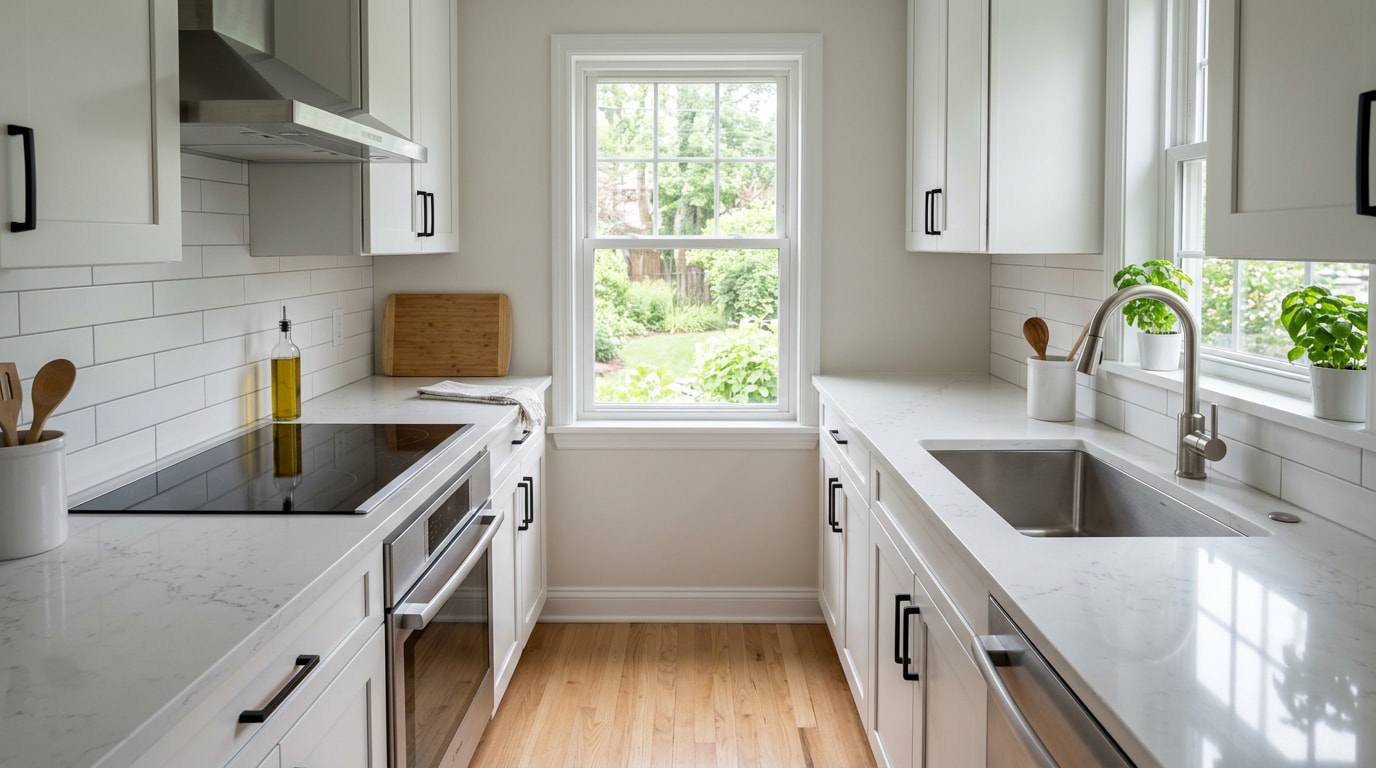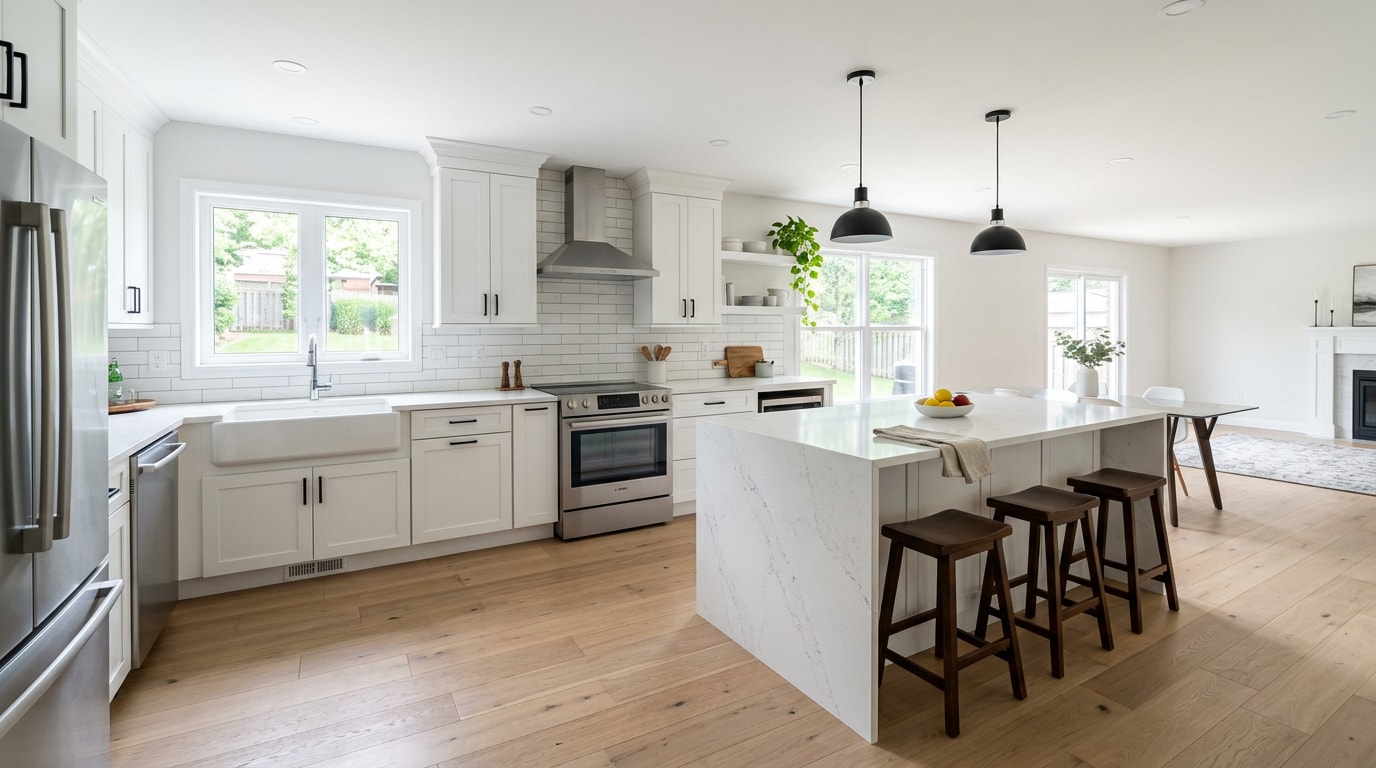
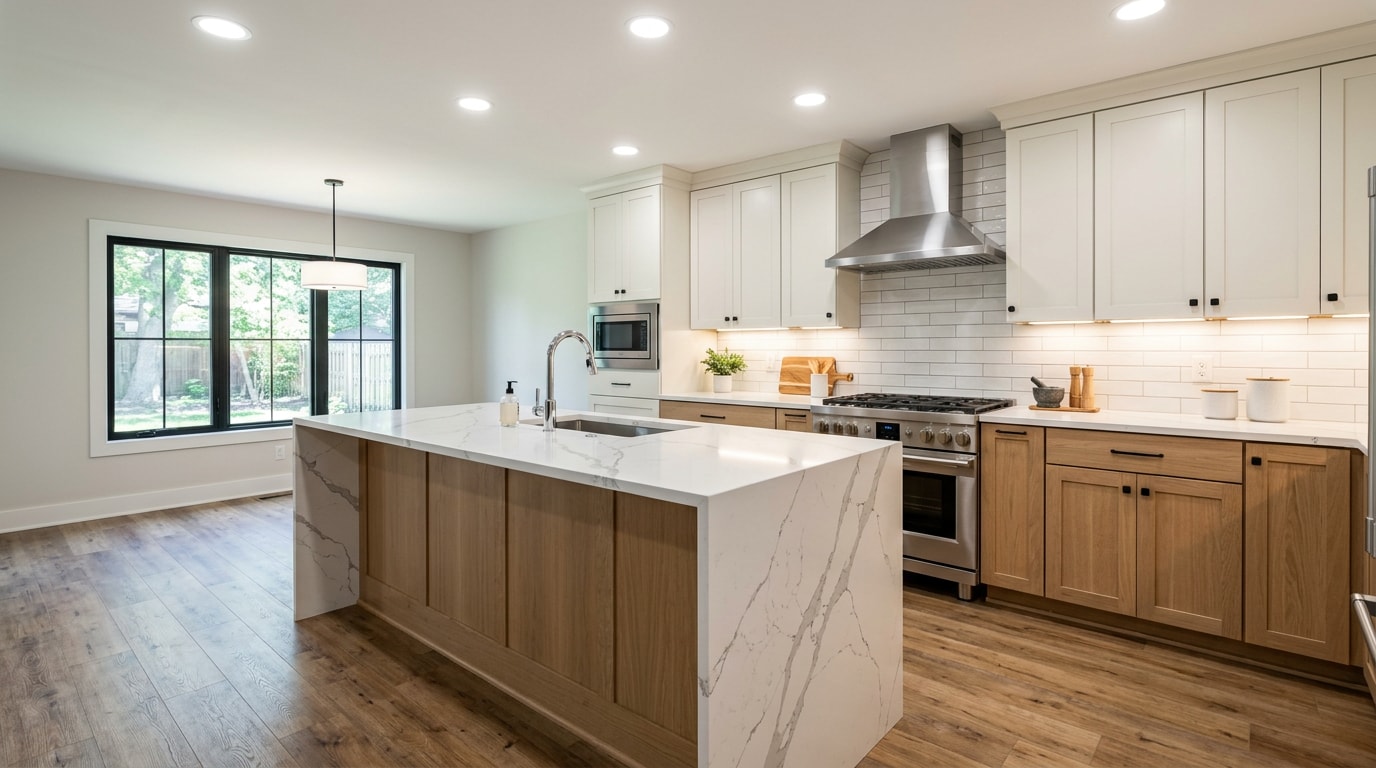
How much would a kitchen remodel cost in 2026? Most homeowners land between $14,600 and $41,600, with a national average near $27,000, while full gut projects with custom cabinetry regularly pass $100,000. The gap between those numbers is not random, and the three decisions that control it are easy to spot before you ever call a contractor.
How Much Would a Kitchen Remodel Cost?
A kitchen remodel runs roughly $75 to $250 per square foot installed. A cosmetic refresh can finish near $8,000. A full gut with a new layout and custom cabinets can pass $150,000.
| Scope | Typical 2026 cost | What it usually includes |
|---|---|---|
| Cosmetic refresh | $8,000 to $20,000 | Paint or refacing, hardware, counters, backsplash, floor |
| Mid-range remodel | $25,000 to $60,000 | Semi-custom cabinets, quartz or granite, appliances, lighting |
| Upscale or full gut | $70,000 to $150,000+ | Layout change, custom cabinetry, pro appliances, structural work |
Here is the honest problem with the national average: almost nobody builds the average kitchen.
Two homes with identical 160 square foot kitchens can land $40,000 apart because one kept its plumbing where it was and the other moved the sink to an island.
Scope and local labor rates drive the spread. The 2025 Cost vs. Value Report from Zonda and the Journal of Light Construction prices a major midrange kitchen remodel at $82,793 nationally, well above the Angi-style averages most cost pages quote, because it prices a complete contractor-built project on a 200 square foot kitchen rather than a mix of partial updates.
So the two questions worth answering first are how deep does this project go and how big is the room. The next two sections take them in that order. If you want to see what each level of work actually includes, our kitchen remodeling services overview walks through scope by tier.
Kitchen Remodel Costs by Project Scope
Scope, not square footage, is the single biggest lever on your final number. Each tier is really a decision about how much of the existing kitchen you keep.
Budget-Friendly Kitchen Renovations
A budget kitchen remodel typically runs $8,000 to $20,000 and leaves the bones alone.
Typical inclusions at this tier:
- Cabinet refacing or repainting with new doors and drawer fronts
- New hardware, faucet, and sink
- Laminate, butcher block, or entry-level stone countertops
- Backsplash tile
- Luxury vinyl plank or sheet flooring
- Updated light fixtures
One decision keeps a project in this band: not moving plumbing, electrical, or gas.
The moment a sink, range, or vent hood shifts position, you add trades, permits, and drywall repair. A minor remodel stays predictable exactly because so little is unknown behind the walls.
Mid-Range Kitchen Remodels
Most readers land here, at roughly $25,000 to $60,000.
A mid-range remodel replaces rather than refinishes: semi-custom cabinets, quartz or granite countertops, a matched appliance package, new flooring, and a real lighting plan with recessed cans and under-cabinet strips.
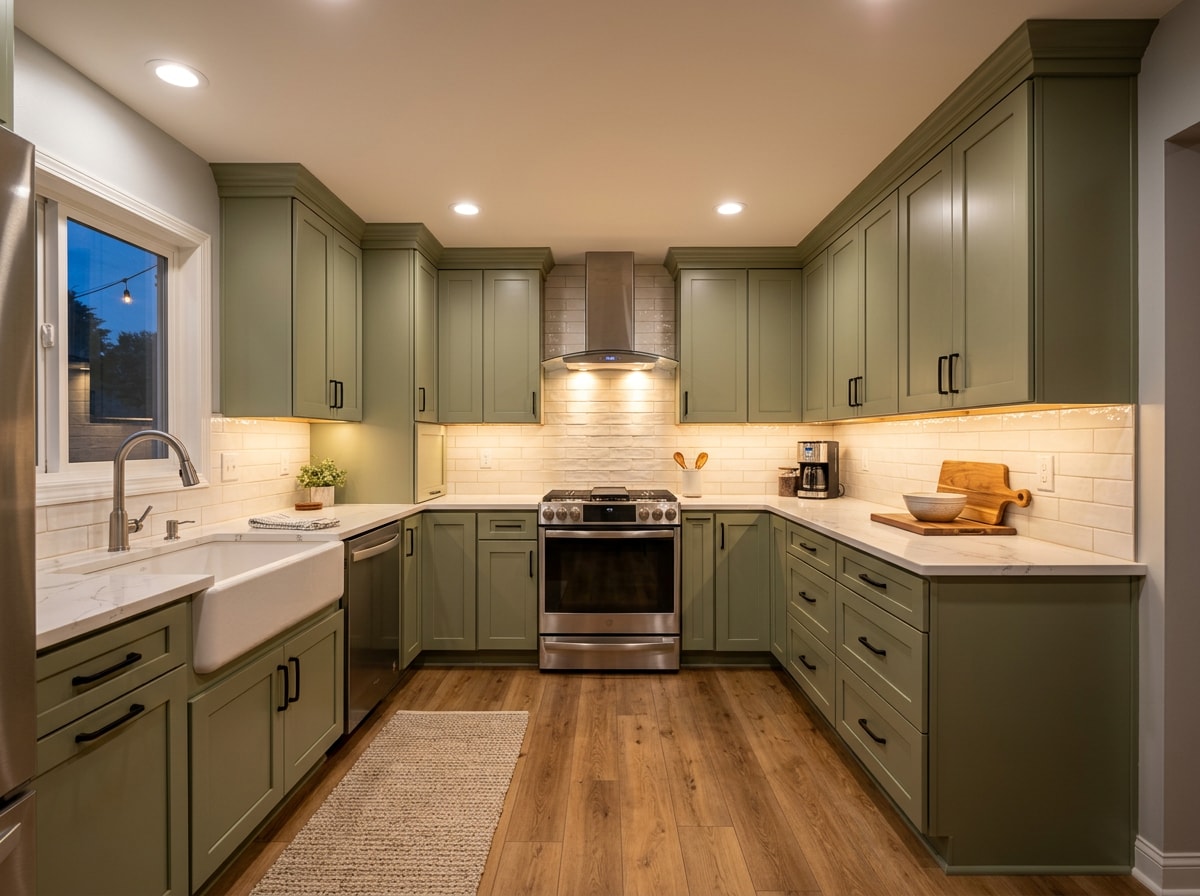
Minor utility relocation often fits this budget. Moving a dishwasher a few feet, adding a dedicated circuit, or relocating one outlet bank rarely breaks the tier.
The band is wide for one reason: cabinetry. Semi-custom boxes can price at $8,000 or $28,000 for the same kitchen depending on door style, wood species, and interior accessories.
Upscale Kitchen Remodels
Upscale work generally starts around $70,000 and runs past $150,000.
At this tier you pay for structure, not just finishes. Walls come down, utilities relocate, and the floor plan changes. Fully custom cabinetry, pro-style ranges, integrated refrigeration, and natural stone slabs follow from there.
The layout change is what surprises people. Removing a load-bearing wall needs an engineered beam, a structural review, and sometimes a foundation detail, line items that rarely appear in early estimates.
Two more costs go unbudgeted at this level: time and temporary kitchen setup. A luxury kitchen renovation commonly runs 10 to 16 weeks, and eating out for three months is its own four-figure expense.
Kitchen Remodel Cost by Size
Using the $75 to $250 per square foot benchmark, here is roughly where common kitchen sizes land:
| Kitchen size | Low end ($75/sq ft) | High end ($250/sq ft) |
|---|---|---|
| 75 sq ft (galley) | $5,625 | $18,750 |
| 100 sq ft (10x10) | $7,500 | $25,000 |
| 150 sq ft | $11,250 | $37,500 |
| 200+ sq ft | $15,000 | $50,000+ |
Now the caveat that table hides: small kitchens cost more per square foot, not less.
Permits, equipment delivery, dumpster rental, trade minimums, and appliance prices do not shrink when the room does. A refrigerator costs the same in a galley as it does in a great room, so a small kitchen carries a heavier fixed-cost load per foot.
Three other factors move the number as much as size does:
- Material grade sets the ceiling. The same 10x10 kitchen can double on cabinet selection alone.
- Layout changes add trades, framing, and inspections.
- Local labor rates vary widely, which is why identical scopes price differently in Palo Alto than they do in a lower-wage market.
Kitchen Remodel Cost Breakdown by Line Item
Think in percentages before dollars. Allocation holds up reasonably well across budget sizes, so once you know how the pie slices, you can apply it to $20,000 or $120,000 and sanity-check any bid you receive.
Widely cited cost guides disagree on the biggest slice. One puts cabinetry near 29% of the project with installation and labor at 17%. Another puts cabinetry at 30% to 40%.
The gap is not an error. It is a definition difference. The lower figure counts appliances and design fees inside the project total, which shrinks every other slice as a share. The higher figure often excludes them. Before you compare any allocation table to your own quote, confirm what the denominator includes.
Here is how one real $45,000 mid-range project we completed on the Peninsula allocated out, line by line:
- Cabinetry: $14,000 (31%)
- Labor and installation: $11,000 (24%)
- Appliances: $6,500 (14%)
- Countertops: $4,500 (10%)
- Flooring: $3,500 (8%)
- Lighting, electrical, and plumbing: $3,000 (7%)
- Permits, design, and contingency draw: $2,500 (6%)
The homeowners kept the sink and range in place. That single choice is why the plumbing and electrical line stayed under $3,000 instead of tripling.
Cabinetry
Cabinets are the biggest expense in nearly every kitchen, running $100 to $1,200 per linear foot installed: roughly $5,000 for stock boxes, $12,000 to $25,000 for semi-custom, and $30,000 and up for custom.
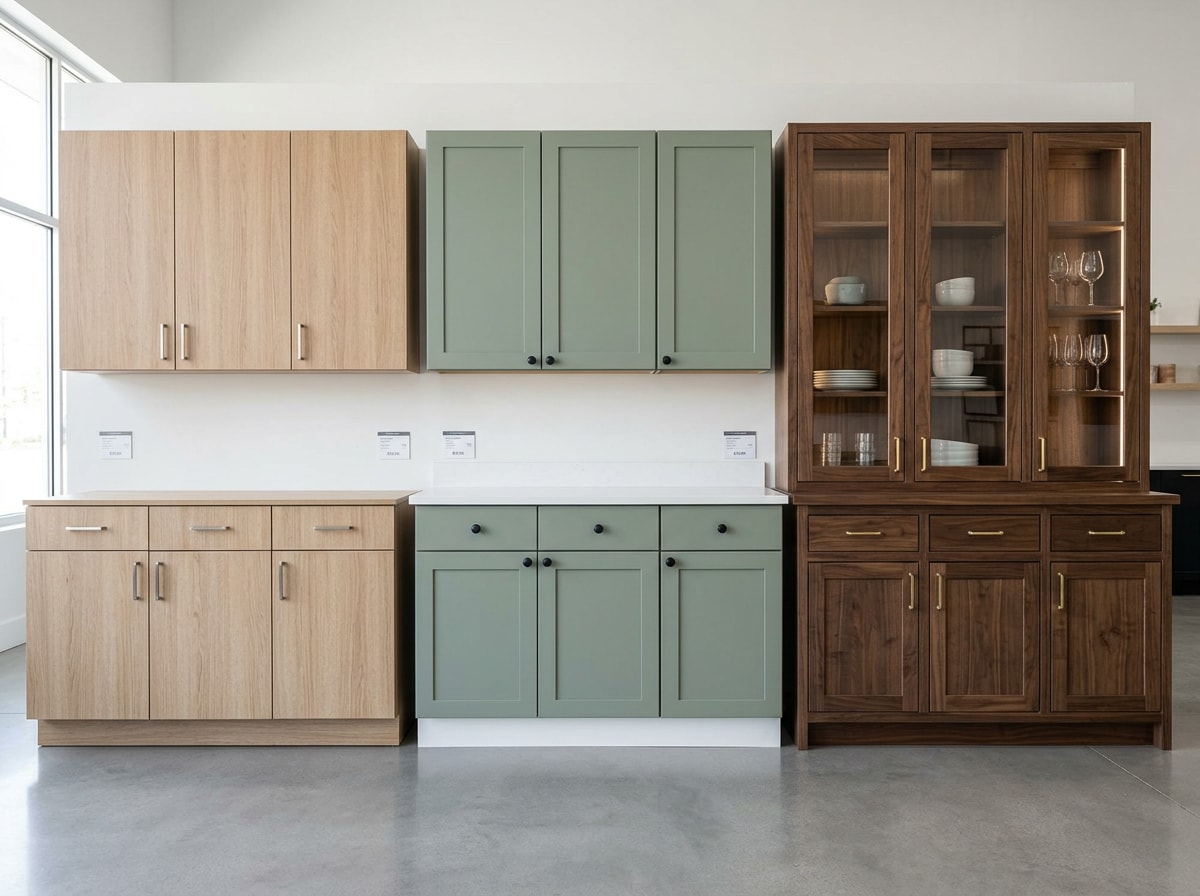
Stock versus custom is where most budgets are won or lost. If your existing boxes are solid and the layout works, refacing typically lands at 30% to 50% of replacement cost, often a $6,000 to $12,000 swing on a mid-size kitchen. See what full replacement involves on our custom cabinet installation page.
Countertops
Installed countertop prices vary more by material than by anything else: laminate at $20 to $50 per square foot, butcher block at $40 to $100, quartz at $60 to $150, granite at $50 to $200, and quartzite or marble at $80 to $250.
The installed price on a quote is not always the final one. Fabrication, edge profiles beyond a standard eased edge, sink cutouts, and seam work are frequently billed separately.
Ask whether template and cutouts are included before you compare two slab bids. Our kitchen countertop installation page covers what a complete slab scope includes.
Appliances
A full appliance package runs about $2,500 to $5,000 builder-grade, $6,000 to $12,000 mid-tier, and $15,000 to $40,000+ for pro-style.
Keeping appliances you already own is one of the few single decisions that removes five figures from a budget without visibly downgrading the room.
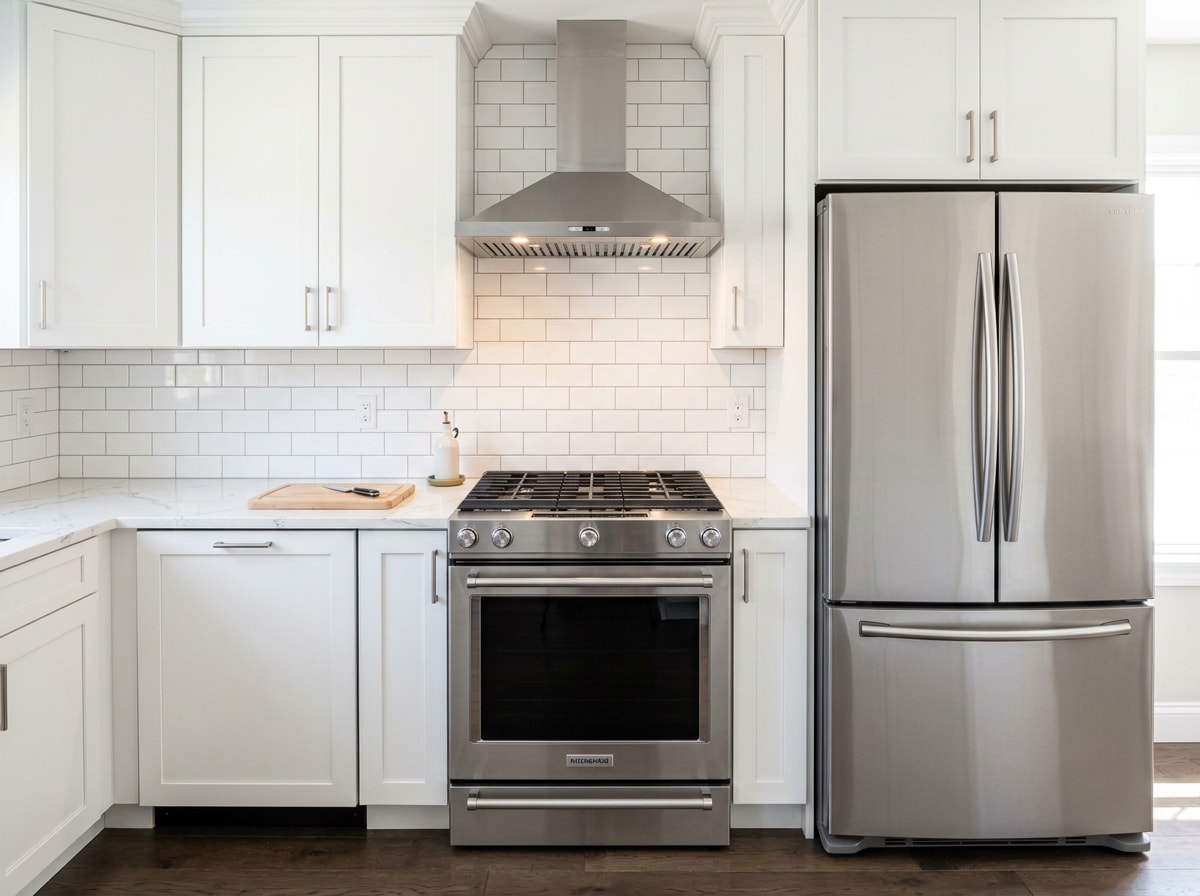
Watch one trap: switching from gas to induction is an electrical cost, not just an appliance upgrade. Most induction ranges need a dedicated 240-volt circuit, and an older panel may need capacity added first. Before you pick a suite, check the current federal and utility incentives listed on the ENERGY STAR electric cooking products page, since rebates can offset part of that electrical work.
Flooring
Installed kitchen flooring generally runs $3 to $7 per square foot for LVP, $8 to $25 for tile, and $8 to $15 for hardwood. Refinishing existing hardwood costs roughly $3 to $8 per square foot and is usually the cheapest path to a new-looking floor.
The common overage is underneath. Water damage near a dishwasher or sink means subfloor repair, and transitions to adjoining rooms often need new thresholds once floor heights change.
Installation, Labor, and Permits
Labor often falls between $3,000 and $6,000, or about 25% of the total budget, on a straightforward project. Remodels that add demolition plus extended plumbing and electrical routinely push labor past 35%.
Budget permits separately. They are the line item homeowners skip most.
Electrical, plumbing, and structural alterations generally require a permit and inspection, and fees are set by your local building department, so they vary by city. In California, any project needing a permit requires a licensed contractor, and the state's homeowner contract checklist from the Contractors State License Board spells out what the written agreement should say about permits and payment schedules.
Want a line-item number instead of a range? Get a free estimate and we will price your actual kitchen, not a national average.
Does a Kitchen Remodel Pay You Back?
This is where scope matters more than finish level.
In the 2025 Cost vs. Value Report, a minor midrange kitchen remodel cost $28,458 and returned an estimated $32,141 at resale, about 113% recouped. A major midrange remodel recouped roughly 51%, and a major upscale remodel about 36%.
The pattern is consistent year over year: the smaller, surface-level project returns the most per dollar, and the six-figure gut returns the least.
That does not make a gut remodel a bad decision. It makes it a lifestyle decision. If you are staying ten years, daily function matters more than recoup rate. If you are selling in eighteen months, the refacing-tier project is the one the numbers support.
How to Plan Your Kitchen Remodel
- Define the goal. Ask what you actually do most in the kitchen. A household that cooks nightly needs counter space and ventilation. One that entertains needs seating and a second sink.
- Set a ceiling, not a target. Decide the maximum you will spend, then design to 85% of it.
- Get at least three in-person bids. Phone estimates for kitchen work are not reliable.
- Lock selections before demolition. Change orders mid-project are the most expensive dollars in any remodel.
- Hold a contingency of 10% to 20%. Older homes sit at the higher end.
That contingency is not padding.
Open a 1970s kitchen floor and you may find a subfloor rotted under the dishwasher, a $1,200 to $3,000 repair. Pull the range and you may find a 100-amp panel with no room for a new circuit, another $1,500 to $4,000.
Our step-by-step guide on how to prepare for a kitchen remodel covers what to document before demo day.
DIY Kitchen Remodel vs. Hiring a Pro
Some tasks genuinely belong to a capable homeowner. Demo, painting, hardware installation, and backsplash tile are DIY-safe, and handling them yourself can trim 10% to 20% off total labor, often $2,000 to $6,000 on a mid-range job.
Other work should not leave a licensed professional's hands. Electrical, gas lines, plumbing relocation, and anything structural carry real safety and liability risk, and most jurisdictions require licensed trades to pull the permits anyway.
Be realistic about the savings. Tool, material, and delivery costs often total $1,500 to $4,000 on a standard kitchen, and one mis-cut slab or re-done tile field can erase the entire margin.
There is a resale angle too. Unpermitted DIY electrical or plumbing frequently surfaces during a buyer's inspection, and fixing it late, with the walls closed, costs far more than doing it right.
Ways to Save on a Kitchen Remodel
Ranked by dollars saved, biggest first:
- Keep the same layout. Leaving plumbing, gas, and venting in place avoids trade work and drywall repair. Savings: $5,000 to $20,000.
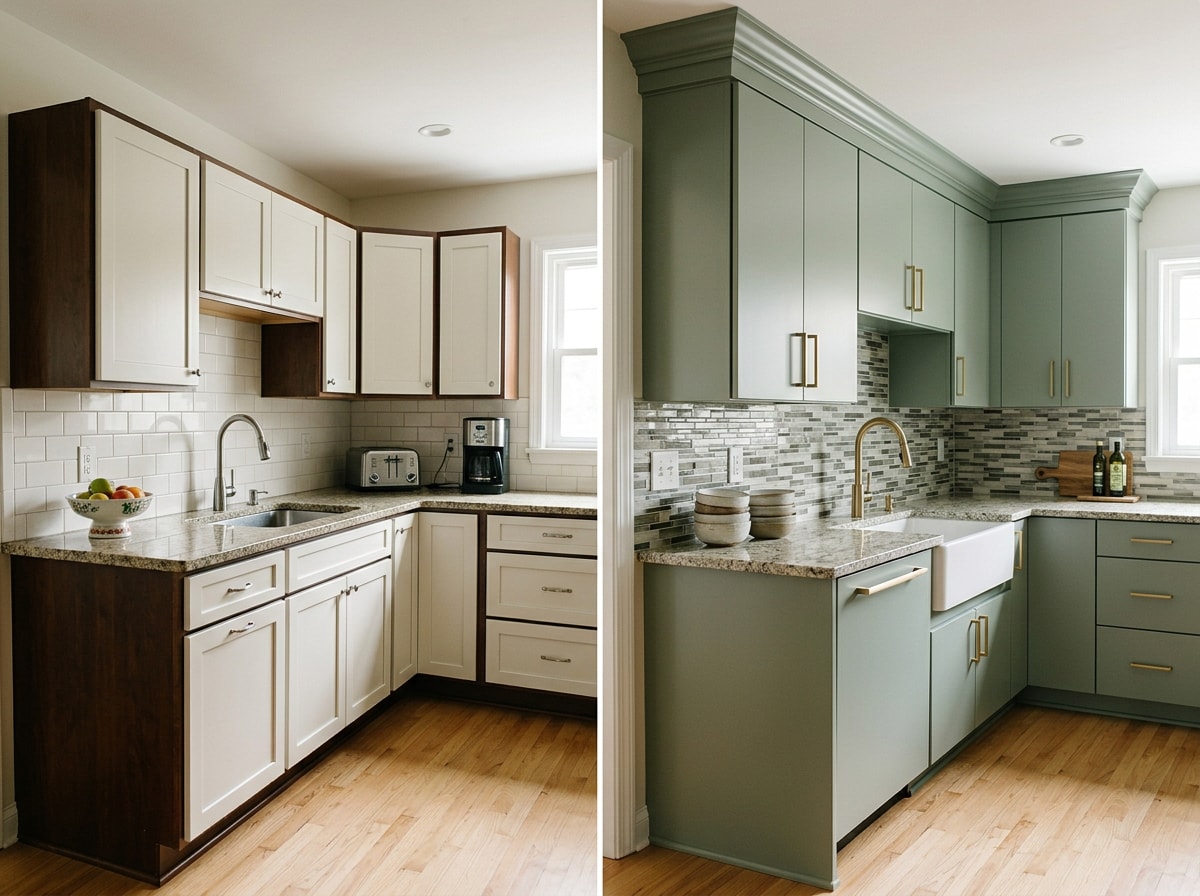
- Reface instead of replacing cabinets. Works when the boxes are structurally sound. Savings: $6,000 to $12,000.
- Choose stock or semi-custom over custom. Savings: $4,000 to $15,000.
- Do some of the work yourself. Demo, paint, and hardware. Savings: $2,000 to $6,000.
- Make simple style choices. Standard door styles, one countertop material, and an eased edge all cut fabrication labor. Savings: $1,000 to $4,000.
- Buy appliances as a bundle. Package pricing and holiday promotions commonly knock 10% to 20% off a suite. Savings: $500 to $2,500.
- Order one tier down on fittings nobody touches. Drawer glides, interior organizers, and trim pieces are easy places to trim. Savings: $300 to $1,500.
FAQ
What is a realistic budget for a kitchen remodel?
Plan on $8,000 to $20,000 for cosmetic work, $25,000 to $60,000 for mid-range, and $70,000 or more for upscale. A common rule of thumb caps spending at 10% to 15% of home value. Treat that as a sanity check on resale exposure, not a quote.
What is the most expensive part of a kitchen remodel?
Cabinetry, by a wide margin, typically 29% to 40% of the total budget. Labor and installation is the runner-up at roughly 17% to 25%, climbing higher on projects with demolition or relocated plumbing and electrical.
How much does a kitchen remodel cost per square foot?
Expect $75 to $250 per square foot. A 150 square foot kitchen lands near $11,250 at the low end and $37,500 at the high end. The per-square-foot figure breaks down once structural work or utility relocation enters the scope.
Is $30,000 enough for a kitchen remodel?
Yes, for most mid-size kitchens, if you keep the existing layout. At $30,000 you can realistically fund semi-custom cabinets or high-quality refacing, quartz counters, new flooring, and a mid-tier appliance package. Moving the sink or range is what pushes that same kitchen past $45,000.
How much does a 10x10 kitchen remodel cost?
Roughly $7,500 to $25,000 depending on finish level, with most full 10x10 projects landing in the $15,000 to $25,000 range when cabinets, counters, and installation are included. Cabinet grade is the variable that moves it most.
How long does a kitchen remodel take?
A cosmetic refresh usually takes two to four weeks. A mid-range replacement runs six to ten weeks. A full gut with layout changes commonly runs 10 to 16 weeks, and cabinet lead times, not labor, cause most of the delay.
What is the cheapest way to update a kitchen?
Paint or reface the existing cabinet boxes, swap hardware and the faucet, add a tile backsplash, and update lighting. That package often lands under $10,000 and leaves plumbing and electrical untouched, which is where costs escalate.
Is a kitchen remodel worth it?
Financially, it depends on scope. The 2025 Cost vs. Value Report put a minor midrange remodel at 113% recouped, a major midrange at about 51%, and a major upscale at about 36%. If you are staying put for a decade, daily use matters more than any recoup rate.
Price Your Kitchen, Not the Average
Every number on this page is a bracket. Your kitchen has a specific layout, a specific panel, and a specific subfloor, and those decide the real figure.
GS Design and Build is a licensed general contractor serving the Peninsula and South Bay, including San Mateo and San Jose. You can see finished work on our projects page or learn more about the company on our home page.
Ready for a real number? Get a free estimate and we will walk your kitchen, check what is behind the walls, and put the scope in writing before anything is demolished.