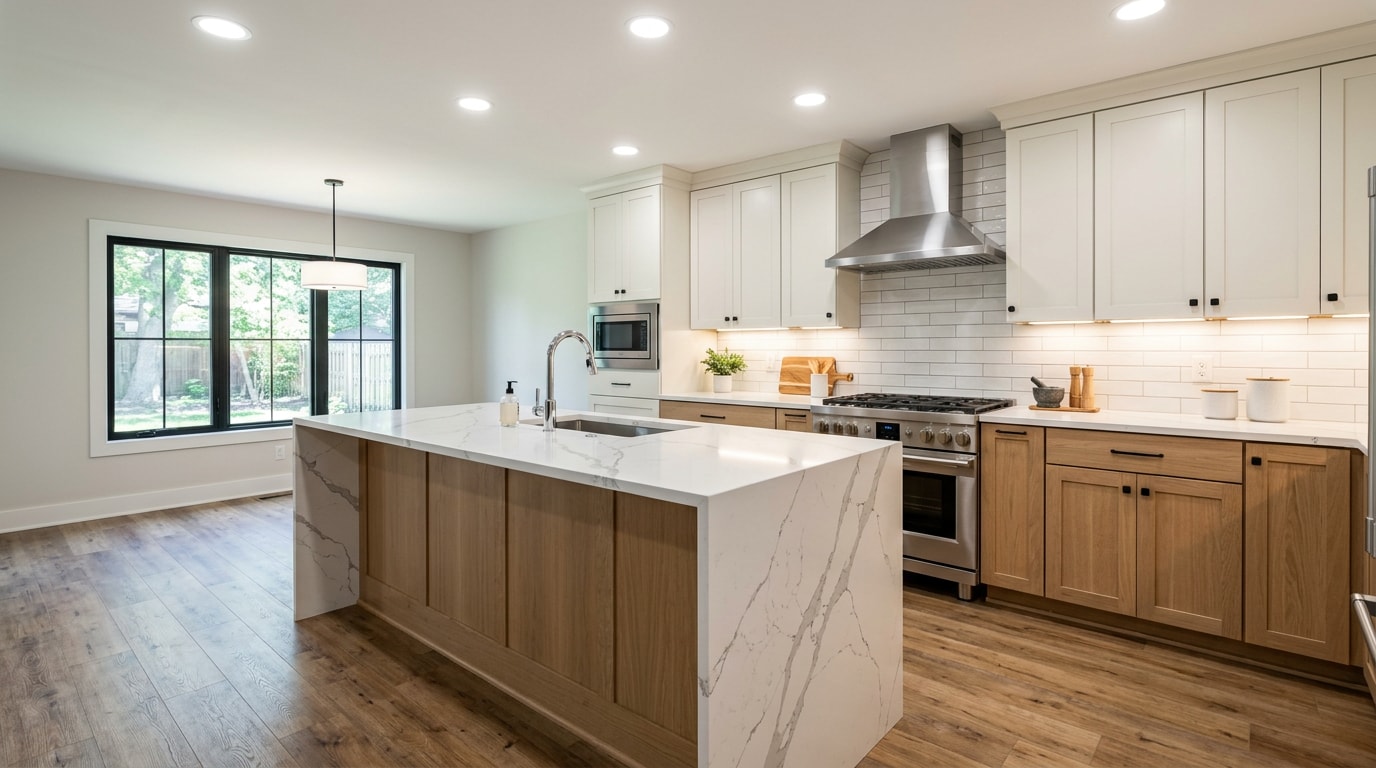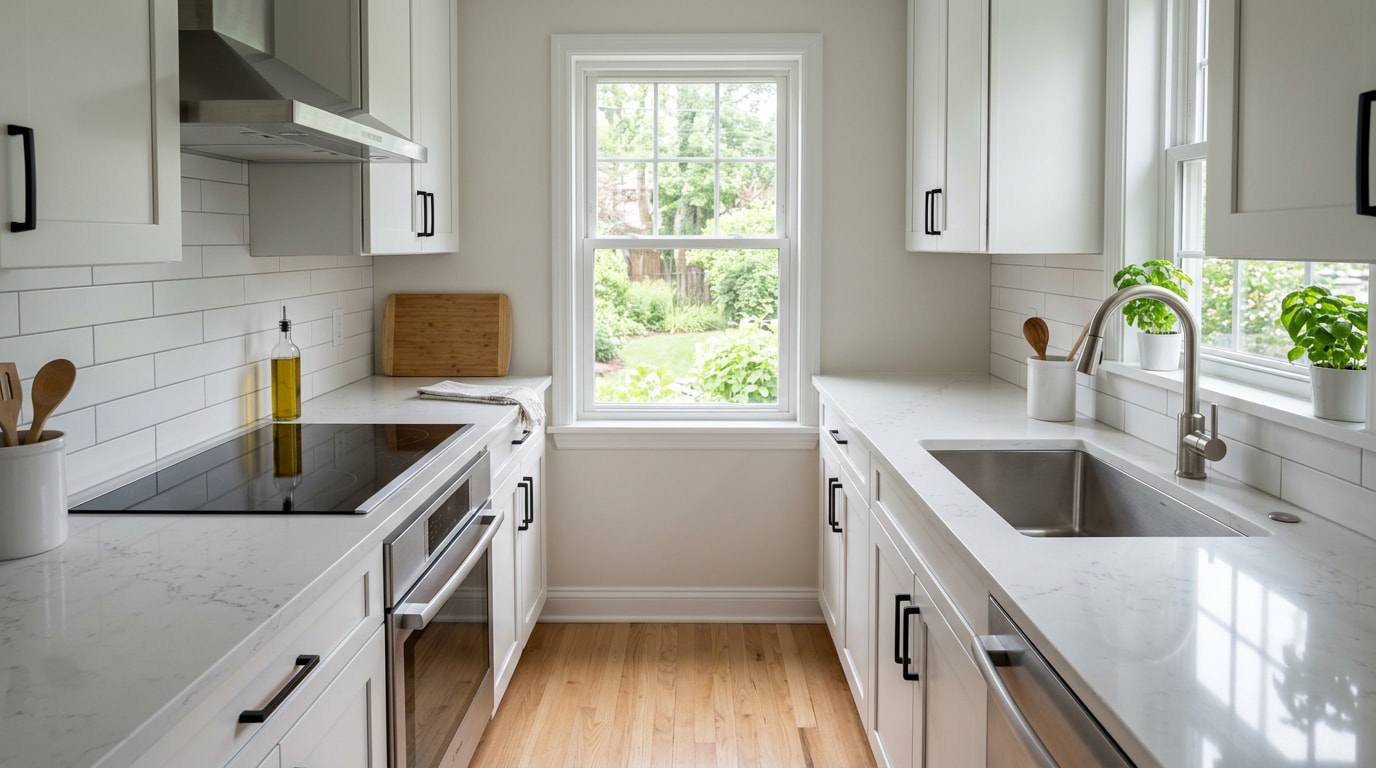
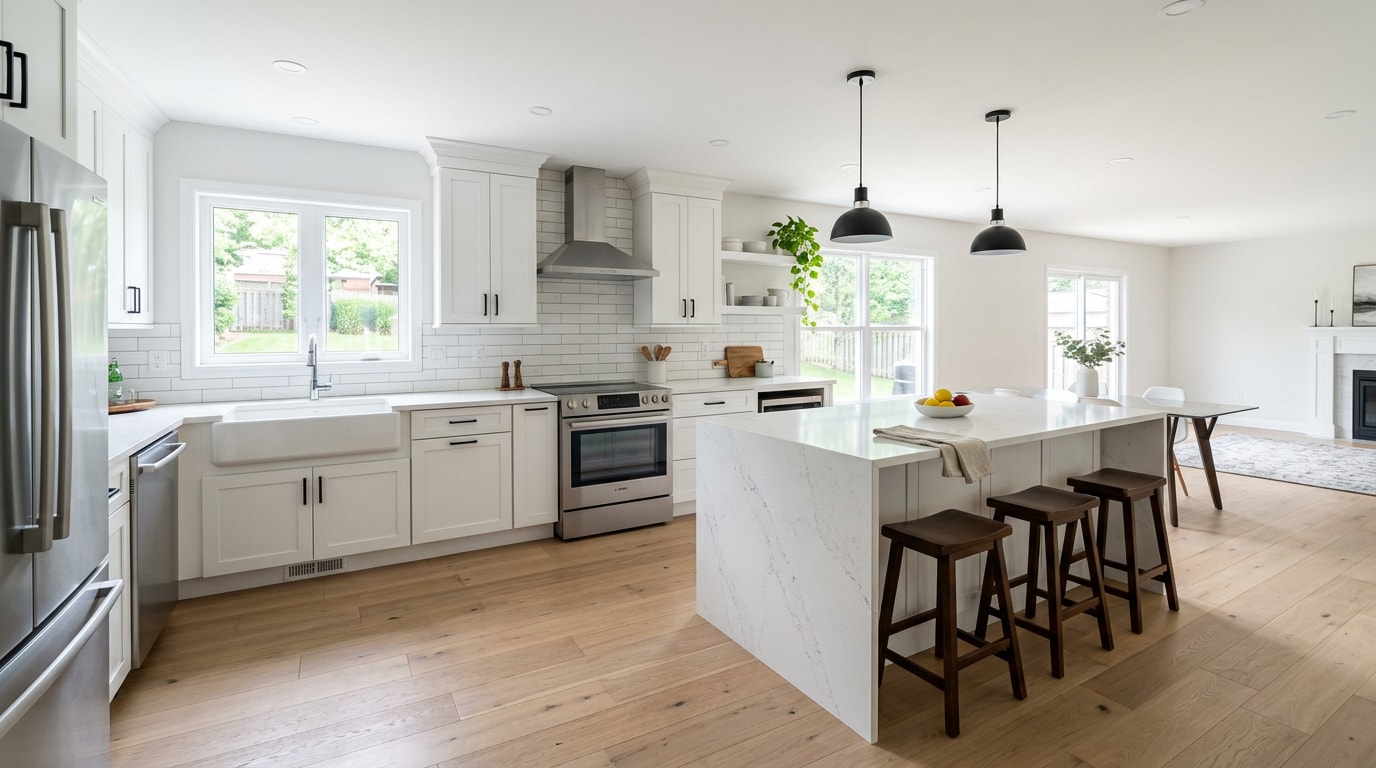
Ask five contractors how much does it cost to do a kitchen remodel and you will get five different numbers, because the phrase covers everything from a weekend cabinet painting job to a full structural gut. Nationally, most homeowners land between $15,000 and $45,000, with reported 2026 averages clustering near $27,000. The useful question is not the average: it is which tier your project sits in, and which line items are about to surprise you.
All figures below are national planning ranges as of 2026. Treat them as budget math, not quotes.
How Much Does It Cost to Do a Kitchen Remodel by Project Scope?
Scope, not kitchen size, is the single biggest lever on your final bill.
A 200 square foot kitchen with painted cabinets and laminate counters can cost less than a 90 square foot galley with custom millwork. Find yourself in one of the four tiers below and you have a working range in about 30 seconds.
| Scope tier | Typical 2026 cost | What it covers |
|---|---|---|
| Cosmetic / small | $10,000 to $25,000 | Refacing or painting, counters, sink, backsplash, lighting, paint |
| Mid-range | $25,000 to $60,000 | Semi-custom cabinets, quartz or granite, flooring, mid-grade appliances |
| High-end | $60,000 to $130,000 | Custom cabinetry, premium stone, pro-grade appliances, designed lighting |
| Complete gut | $65,000 to $130,000+ | Walls, relocated plumbing and electrical, structural work, permits |
Our kitchen remodeling services) page walks through what each tier looks like in practice.
Cosmetic or Small Kitchen Remodel Cost
A cosmetic refresh typically runs $10,000 to $25,000, with many small kitchens landing between $10,000 and $15,000.
This tier covers cabinet refacing, refinishing, or painting, laminate or butcher block counters, a new sink and faucet, backsplash, light fixtures, and paint. The layout stays exactly where it is.
Cabinet refacing is the workhorse here. You keep the existing boxes, replace doors and drawer fronts, and veneer the frames for roughly a third of replacement cost.
Be clear about what this tier does not buy:
- No relocated plumbing
- No new cabinet boxes
- No full appliance suite
- No flooring under the cabinets
A cosmetic update makes a dated kitchen look current. It does not fix a kitchen that functions badly. If your real complaint is the floor plan, skip this tier or you will spend the money twice.
Mid-Range Kitchen Remodel
Most readers land here. A mid-range kitchen remodel generally costs $25,000 to $60,000, which is why national averages sit in the high $20,000s.
What that buys: semi-custom cabinets, quartz or granite counters, new flooring throughout, a mid-grade appliance package, under-cabinet and recessed lighting, a new sink and disposal, and minor plumbing or electrical relocation such as moving an outlet, adding a circuit, or shifting a sink a few feet along the same wall.
Semi-custom cabinets are the defining choice at this level. You get real door style, finish, and sizing options without the lead time and price of true custom.
High-End Kitchen Remodel Cost
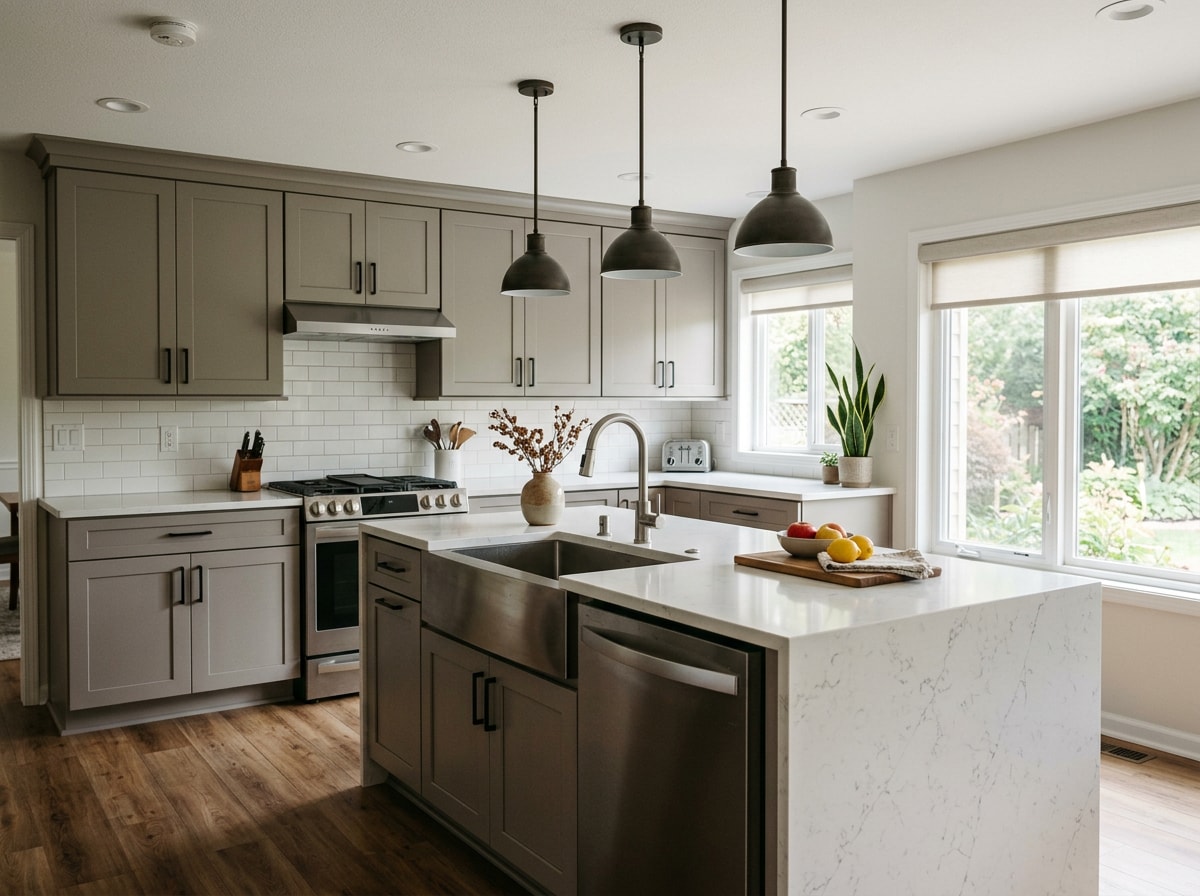
A high-end kitchen remodel usually runs $60,000 to $130,000, and luxury projects in expensive metros push past $150,000.
The money goes into custom cabinetry built to exact dimensions, premium countertops like marble or quartzite, professional-grade appliances, a designed lighting plan with multiple circuits and dimmers, and detailed trim and millwork.
One point worth being blunt about: high-end is a materials and finishes tier, not a structural one. You can spend $100,000 without moving a single wall. A 48 inch range, a panel-ready refrigerator, and inset custom cabinets get you there on their own.
That distinction matters for budgeting. If your walls stay put, you control the number by controlling the spec sheet.
Complete Kitchen Remodel Costs
A complete gut typically costs $65,000 to $130,000 or more. Walls come out, plumbing and electrical get relocated, gas lines move, and structural work enters the conversation.
The multipliers nobody budgets for:
- Drawings. Removing walls often means a structural engineer or architect, commonly $1,000 to $5,000.
- Load-bearing changes. A beam, posts, and sometimes footing work.
- Permit review. Structural permits cost more and take longer than a simple electrical permit.
- Time. A gut job commonly runs 10 to 16 weeks of cooking in a temporary setup.
Carry a bigger cushion at this tier. Relocating plumbing and electrical in an older home reliably uncovers something, so plan a 15 to 20 percent contingency rather than 10.
Cost Breakdown of a Full Kitchen Remodel
The tier ranges above are totals. Opening them line by line shows where the money concentrates and which categories are worth protecting versus trimming.
Cabinets
Cabinetry is the largest single line item in essentially every kitchen budget, typically 25 to 35 percent of the total and up to 40 percent on cabinet-heavy layouts.
Cabinet cost is usually quoted per linear foot, installed:
- Stock cabinets: $100 to $300 per linear foot
- Semi-custom cabinets: $250 to $650 per linear foot
- Custom cabinets: $500 to $1,500+ per linear foot
Measure your cabinet run in linear feet and multiply. A typical kitchen has 20 to 30 linear feet of base and wall cabinets combined.
Refacing changes the math dramatically, at roughly $60 to $200 per linear foot, or $4,000 to $12,000 for most kitchens. You pay for doors, drawer fronts, hardware, and veneer instead of new boxes, demolition, disposal, and re-leveling. The catch: refacing only works if your existing boxes are solid and your layout already works.
See our custom cabinet installation page for door styles and material comparisons.
Countertops
Installed countertop) cost per square foot varies more by material than almost any other category:
| Material | Installed cost per sq ft |
|---|---|
| Laminate | $20 to $50 |
| Butcher block | $40 to $100 |
| Solid surface | $45 to $100 |
| Granite | $50 to $120 |
| Quartz | $60 to $150 |
| Marble | $75 to $250 |
The number that matters is the installed figure, not the slab price. Installation climbs with decorative edge profiles, every seam, each sink or cooktop cutout, and template and fabrication fees that get charged whether your kitchen is 30 square feet or 60.
Most kitchens need 30 to 50 square feet of counter surface. An island adds 15 to 25 more.
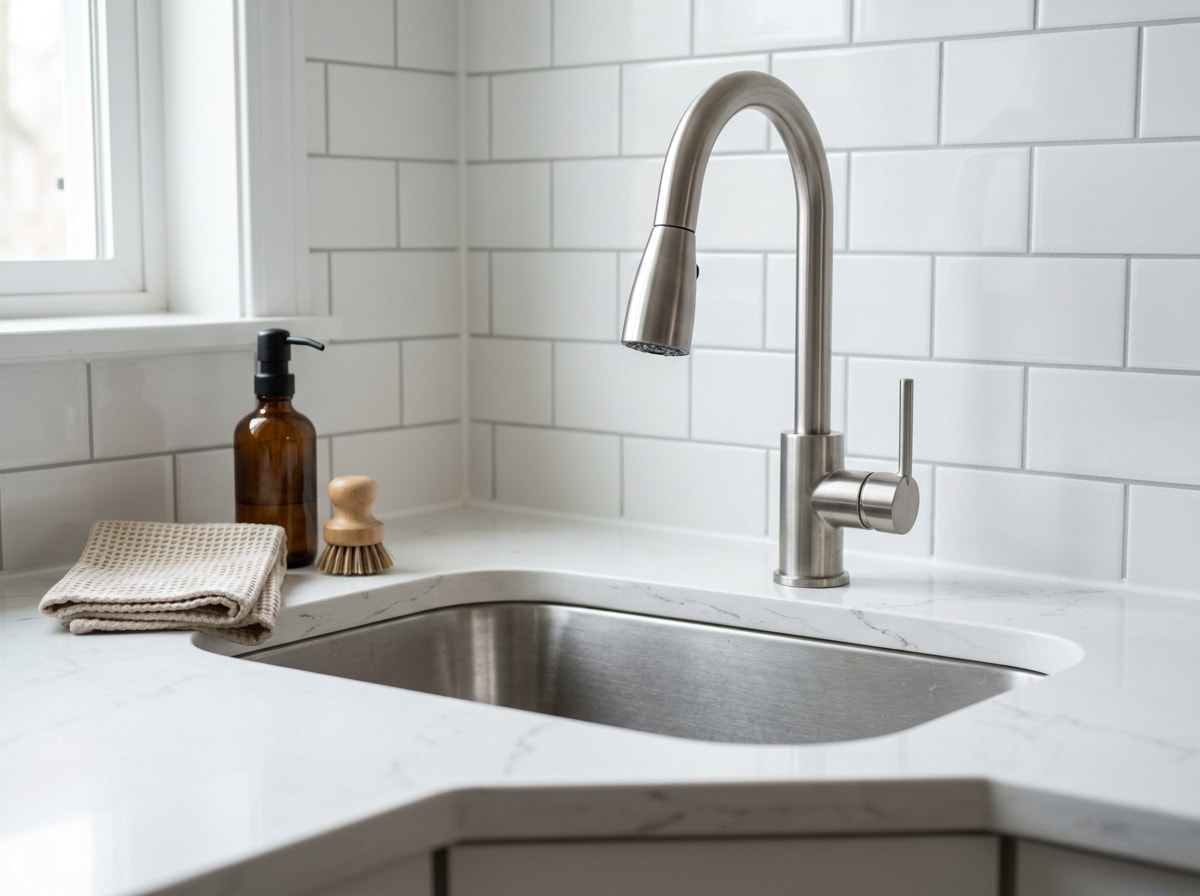
Cost to Update Kitchen Backsplash
A backsplash typically runs $900 to $2,500 installed, or about $15 to $40 per square foot for standard tile.
Labor is a disproportionate share of that, often half or more, since most kitchens only need 30 to 45 square feet of material.
That ratio makes tile backsplash one of the few genuinely DIY-friendly line items. A straight subway layout or a peel-and-stick product at $5 to $15 per square foot is within reach for a careful beginner. Unlike cabinets, a mistake here is cheap to fix.
Labor Cost to Remodel a Kitchen
The labor line is not one trade. It is a general contractor, a cabinet installer or finish carpenter, a plumber, an electrician, a tile setter, a drywaller, and a painter, plus GC overhead and markup that usually runs 10 to 20 percent on top of subcontractor costs.
Federal wage data gives you a sanity check on any bid's labor assumptions. The Bureau of Labor Statistics lists 2025 median pay of $60,580 for carpenters and $63,190 for electricians , and $63,800 for plumbers, pipefitters, and steamfitters . You can check the current figures in the BLS Occupational Outlook Handbook. Loaded shop rates charged to homeowners run well above those wages once insurance, vehicles, overhead, and profit are added.
Here is what no cost guide tells you: published labor percentages flatly contradict each other.
| How the estimate is structured | Labor share of total |
|---|---|
| Cabinets and appliances counted as materials, GC markup broken out | 20 to 25% |
| Installed pricing used throughout, markup bundled in | 50 to 60% |
| Mixed convention (most aggregator averages) | 25 to 35% |
| Budget materials, same installation hours | up to 70% |
They disagree because they measure different things. If a $14,000 cabinet package sits on the materials side, labor's percentage shrinks. If that same package is quoted installed, labor disappears into it. Cheap materials do not reduce installation hours, so budget finishes push labor's percentage up while the dollar figure stays flat.
The practical move: ask each contractor which convention their bid uses before you compare two quotes. Otherwise you are comparing 25 percent labor against 55 percent labor and concluding nothing.
Factors in Calculating Kitchen Remodel Cost
Two kitchens at the same scope tier routinely finish thousands of dollars apart. Three variables explain most of that gap: how big the room is, how it is shaped, and where it sits.
Kitchen Remodel Cost by Square Foot
Cost per square foot runs roughly $100 to $250 for basic to mid-range finishes and $250 to $500 or more for high-end work, including labor and materials.
| Kitchen size | Basic ($100 to $150/sq ft) | Mid-range ($150 to $250/sq ft) | High-end ($250 to $500/sq ft) |
|---|---|---|---|
| 75 sq ft | $7,500 to $11,250 | $11,250 to $18,750 | $18,750 to $37,500 |
| 100 sq ft (10x10) | $10,000 to $15,000 | $15,000 to $25,000 | $25,000 to $50,000 |
| 150 sq ft | $15,000 to $22,500 | $22,500 to $37,500 | $37,500 to $75,000 |
| 200 sq ft | $20,000 to $30,000 | $30,000 to $50,000 | $50,000 to $100,000 |
| 300+ sq ft | $30,000+ | $45,000+ | $75,000+ |
Critical caveat: per square foot math understates a small kitchen. Permits, appliances, design fees, demolition, and delivery are largely fixed costs spread across less area. A 75 square foot kitchen still needs a refrigerator, a range, and an inspection.
Layout
Layout drives cost through two channels: linear feet of cabinetry and counter run, and how far utilities have to travel.
Ranked from least to most expensive: galley, then L-shaped, then U-shaped, then any layout with an island.
An island alone typically adds $3,000 to $12,000, more if it carries a sink or cooktop, since that means plumbing, drain venting, or a gas line running through the floor.
Stated plainly: keeping your sink, range, and appliances on their existing plumbing and electrical runs is the highest-leverage cost decision in the project. On the Bay Area kitchens our crews open up, mid-century homes almost never have a drain line where the new island wants one, and moving the sink even six feet has added $1,000 to $5,000 once drain slope, venting, and floor repair were priced. You can see finished examples in our project gallery.
Where Prices Vary by Region
Four things drive regional differences:
- Local trade wages, which vary by state far more than national medians suggest
- Permit fees and review timelines set by your city or county
- Material freight and delivery distance
- How booked local contractors currently are
Metro pricing commonly runs well above rural pricing in the same state for identical materials, purely on wages and overhead. High-cost coastal markets such as San Jose and Palo Alto sit at the top of that spread, so national averages are a weak guide there.
Additional Costs and Considerations
These are the line items that wreck budgets because nobody planned for them:
- Building permits and inspection fees: a few hundred to a couple thousand dollars, entirely dependent on jurisdiction
- Design or architectural fees: 5 to 15 percent of project cost, or $100 to $250 per hour
- Demolition and dumpster rental: $500 to $3,500
- Appliance delivery and haul-away: $100 to $500
- Temporary kitchen setup and storage: $300 to $1,500 over a multi-month job
Permits are triggered by work type, not project size. Paint, refacing, a backsplash, and a faucet swap generally are not permitted. New circuits, panel upgrades, relocated plumbing or gas, and wall removal generally are.
The International Residential Code sets minimum requirements for one- and two-family dwellings, covering building, plumbing, mechanical, fuel gas, and electrical provisions in a single document , and you can read the model text at ICC Digital Codes. Your local building department adopts and amends it, so confirm fees and triggers there before you assume.
Finally, carry a contingency of 10 to 20 percent. In older homes that is not padding. It is where you pay for outdated wiring, undersized service, hidden water damage, and floors that are nowhere near level.
Kitchen Remodeling: DIY vs. Hiring a Professional
Your own labor is the biggest discount available on a kitchen, but it is a task-by-task decision rather than all-or-nothing.
Homeowners who DIY the genuinely DIY-able tasks and hire out the rest typically save 20 to 35 percent off a comparable turnkey project, not the 50 percent the internet promises.
| Task | DIY material cost | Pro installed cost |
|---|---|---|
| Paint and drywall patching | $150 to $500 | $800 to $3,000 |
| Peel-and-stick or simple tile backsplash | $300 to $900 | $900 to $2,500 |
| Cabinet painting | $200 to $600 | $1,500 to $5,000 |
| Vinyl plank flooring | $600 to $2,000 | $1,800 to $5,000 |
| Stock cabinet installation | $2,500 to $8,000 | $4,500 to $14,000 |
| Sink and faucet swap | $250 to $900 | $600 to $1,800 |
| Countertops (templated stone) | not recommended | $2,000 to $6,000 |
| Appliances | $2,500 to $8,000 | $3,000 to $9,500 |
The hard line: plumbing, gas, electrical, and structural work go to licensed trades. Permitted work must be inspected, unpermitted work surfaces at resale, and self-installation can void appliance and material warranties. Licensed trades also carry insurance you do not.
How to Budget for Your Kitchen Remodel
Build the number from the bottom up, in this order:
- Pick your scope tier from the four above.
- Apply your square footage using the table, then nudge upward if your kitchen is under 100 square feet.
- Adjust for your market, roughly plus or minus 20 percent from national figures, more in expensive metros.
- Add the extras: permits, design, demo, disposal, temporary kitchen.
- Add 10 to 20 percent contingency on top of the subtotal, not inside it.
You will see the guideline that a kitchen should cost 5 to 15 percent of your home's value. It is a reasonable sanity check that breaks down fast in high-cost metros, where mid-range projects routinely exceed that band on a modestly valued home.
For sequencing, protect the cabinets and the layout. Those are expensive and disruptive to redo. Flex on faucets, lighting, hardware, and backsplash, which you can upgrade cheaply in five years without touching anything structural.
Our pre-demo checklist for kitchen remodels covers the planning steps that keep these numbers from drifting once work starts.
How to Save Money on Kitchen Remodel Costs
Ranked by how much each lever actually saves:
- Keep the existing layout and plumbing locations. Often $3,000 to $10,000.
- Reface or paint cabinets instead of replacing them, if the boxes are sound.
- Choose stock or semi-custom over custom. The visual difference is smaller than the price difference.
- Replace only what is failing. A good floor and a working dishwasher owe you nothing.
- Pair one premium surface with budget supporting materials, such as quartz counters with stock cabinets.
- DIY demo, paint, and backsplash, and hire the rest.
- Shop appliance packages off-season, around holiday weekends and model-year changeovers.
On appliances, efficiency changes the real cost of ownership. Products that earn the ENERGY STAR label meet energy-efficiency specifications set by the EPA , and the ENERGY STAR product and rebate finder lists utility and state incentives by ZIP code that can offset part of a new suite.
Avoid the false economies: cut-rate cabinet boxes that sag within five years, skipped permits, and unlicensed trades. Each costs more later than it saved today.
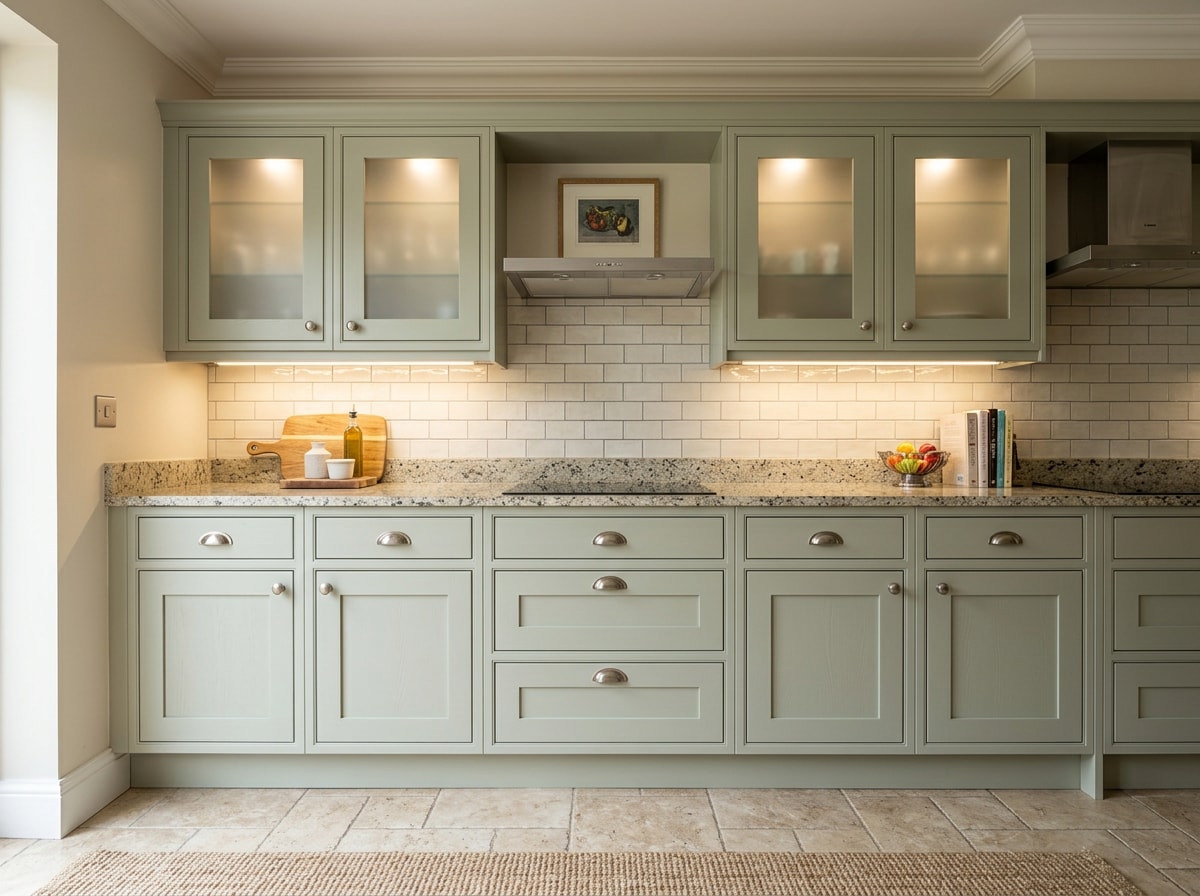
ROI on a Kitchen Remodel
The counterintuitive part of kitchen ROI: smaller projects recoup a larger share of their cost. A full gut almost never returns its price at resale, while a targeted upgrade can return much of it.
In the 2025 Remodeling Impact Report, the highest cost-recovery projects were modest ones: a new steel front door at 100 percent, a closet renovation at 83 percent, and a fiberglass front door at 80 percent.
Kitchen upgrades scored a perfect Joy Score of 10 and were the single most in-demand project at 48 percent , which is the honest case for remodeling: you buy daily use value first and resale value second. The full findings are published by the National Association of Realtors.
Separate resale value from use value. Selling within two years? Do the minor remodel. Staying a decade? Function, storage, and energy savings matter more than any paper value increase.
Two caveats worth holding onto. Returns vary sharply by local market. And over-improving relative to your neighborhood caps the return hard.
Questions to Ask About Kitchen Remodeling
Before you sign anything, put these to every contractor:
- Is this bid fixed-price or time-and-materials?
- What are the allowances for cabinets, countertops, and appliances?
- Who pulls the permits?
- What is the payment schedule, and what triggers each draw?
- How are change orders priced, and what markup applies?
- Who is my daily on-site contact?
- What does the workmanship warranty cover, and for how long?
- Are you licensed and insured, and may I see the certificate?
Allowances and bid structure are what make two quotes genuinely comparable. Without them you are comparing a bid carrying $18,000 of cabinets against one carrying $9,000, and the cheaper one is not cheaper.
When you are ready to price a real scope instead of a national average, get a free estimate from the team at GS Design and Build. We walk the kitchen, check what is behind the walls, and put allowances in writing before anything gets demolished.
FAQ
What is a realistic budget for a kitchen remodel?
For most homeowners, $25,000 to $60,000 buys a mid-range remodel, while the broader national range runs about $15,000 to $45,000 with averages near $27,000. Where you land depends mostly on scope tier and local labor rates.
Is $30,000 enough for a kitchen remodel?
Yes, for a small to average kitchen at mid-range finishes. A $30,000 budget typically covers semi-custom cabinets, quartz counters, new flooring, a mid-grade appliance package, and lighting, provided the layout stays put. It will not stretch to custom cabinetry, pro-grade appliances, or moving walls and plumbing.
What is the most expensive part of a kitchen remodel?
Cabinets, typically 25 to 35 percent of the budget and up to 40 percent in cabinet-heavy layouts. Labor is second, though its reported share swings widely depending on whether installation is bundled into material pricing. Countertops and appliances usually rank third and fourth.
How much does it cost to remodel a 10x10 kitchen?
Roughly $12,000 to $22,000 for a minor refresh, $25,000 to $45,000 mid-range, and $50,000 to $80,000 or more at high-end finishes. Note that "10x10" is also a cabinet-industry pricing benchmark representing about 20 to 25 linear feet of cabinets, not only a room dimension.
Do I need a permit for a kitchen remodel?
Usually yes if utilities or structure change. Painting, refacing, backsplash, and fixture swaps typically do not require a permit. New circuits, panel upgrades, relocated plumbing or gas lines, and wall removal typically do. Fees and triggers are set locally, so confirm with your building department first.
How long does a kitchen remodel take?
A cosmetic refresh runs about 2 to 4 weeks. A mid-range remodel with no layout changes commonly runs 6 to 10 weeks. A full gut with relocated utilities or structural work runs 10 to 16 weeks, plus design and permit time before demo.
Can you remodel a kitchen for $10,000?
Yes, if you keep the layout and limit the scope. At $10,000 you are painting or refacing cabinets, replacing counters with laminate or butcher block, adding a backsplash, and swapping the sink, faucet, and light fixtures. New cabinet boxes and a full appliance suite do not fit that number.
Should I replace cabinets or reface them?
Reface if the boxes are square, solid, and the layout works. Refacing costs roughly a third of replacement at $4,000 to $12,000 for most kitchens. Replace if boxes are water damaged, if you need different sizes or storage, or if the layout is changing anyway.
Does a kitchen remodel pay for itself?
Rarely in full. Minor upgrades recover a much larger share of their cost than complete gut renovations, and returns vary by local market. Remodel primarily for how you use the kitchen, and treat resale recovery as a partial offset rather than an investment return.