Yes, a bathroom remodel increases home value, but the two most-cited industry reports put the payback anywhere from 50 cents to 80 cents on the dollar. That spread is not noise. It comes down to how each report defines the project, and once you understand the difference you can predict which end of the range your own bathroom lands on.
Does a Bathroom Remodel Increase Home Value?
Yes. A bathroom remodel almost always increases resale value, but most projects recoup only part of what they cost.
The most recent Cost vs. Value data puts a midrange bathroom remodel near the top of the interior-project list. Bathroom remodels often recoup at least 60% of their costs, and mid-range bathroom remodels may recoup up to 80% of their costs through increased home value, according to the Remodeling 2025 Cost vs. Value Report.
Recovering less than 100% is normal for interior remodeling. It is not a failed project.
There is a second payoff that never appears on a settlement statement. The 2025 NAR Remodeling Impact Report gives a bathroom renovation a Joy Score of 9.8 out of 10, near the top of the list. Decide which return you are buying before you pick finishes.
Why the Two Big ROI Reports Disagree (50% vs. 80%)
This is the part most articles skip, and it explains almost every confusing number you will find online.
Two respected sources publish bathroom numbers, and they measure different things.
- Zonda's Cost vs. Value Report prices one tightly defined scope.
JLC and Zonda price a tightly defined project scope, then survey more than 6,000 real estate professionals on what that specific project would add to a sale price. Narrow scope, higher percentage.
- The NAR/NARI Remodeling Impact Report measures a broad category.
NAR supplies a Recovered Project Cost percentage estimating the dollar value each project adds at resale; a new steel door recovers 100 percent, a closet renovation 83 percent, while bathroom renovations recover only 50 percent.
So the honest framing is a range, not a single figure. Cost recovery on a bathroom remodel lands in a broad 50% to 80% band, depending on project definition, scope, market, and starting condition.
In our own Bay Area projects, the baths that land near the top of that range are the ones where nothing moved. Same drain, same water lines, new everything you can see. The ones that land near the bottom are the ones where a client relocated a toilet three feet to gain a linen closet.
You can read the full methodology in Zonda's 38th annual Cost vs. Value Report, which covers 28 remodeling projects at the Zonda Cost vs. Value Report, and the survey detail in the NAR Remodeling Impact Report summary.
Bathroom Remodel ROI by Project Tier
In remodeling, ROI means cost recouped at resale, expressed as a percentage of what the project cost. Spend $25,000, add $18,000 in appraised value, and that is 72%.
The industry sorts bath projects by finish tier, not by room size. A tiny hall bath with quartz counters and custom tile can land in a higher tier than a large bath finished with stock materials.
| Project tier | Typical national spend | Cost recouped | Best for |
|---|---|---|---|
| Midrange remodel, existing footprint | ~$12,000 to $30,000 | ~74% to 80% | Sellers and broad-appeal resale |
| Universal design bath | ~$35,000 to $45,000 | ~61% | Aging in place, wider buyer pool |
| Upscale remodel | ~$70,000 and up | ~45% | Long-term owners, high-end comps |
Percentages reflect national averages from the 2025 Cost vs. Value Report and are rounded. Spend ranges are 2026 market ranges, not report figures.
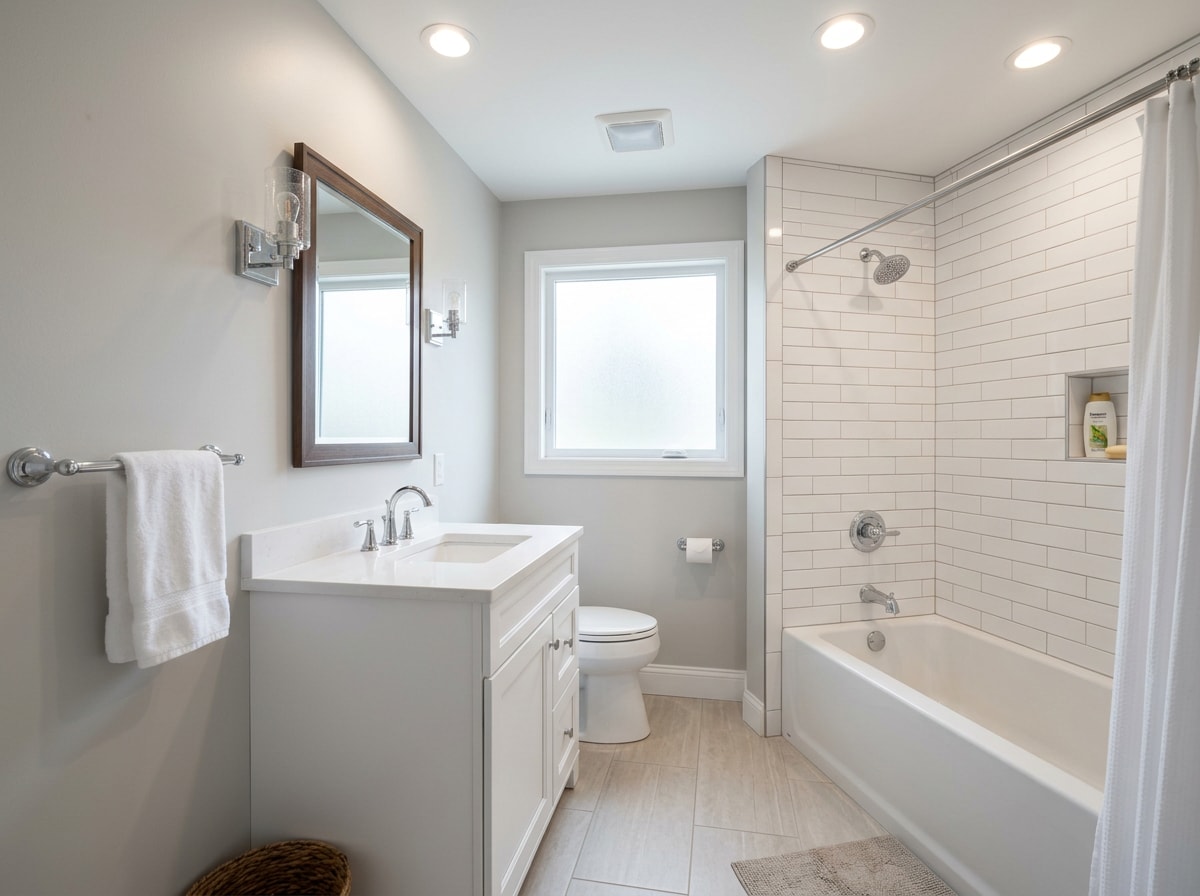
Midrange Bathroom Remodel
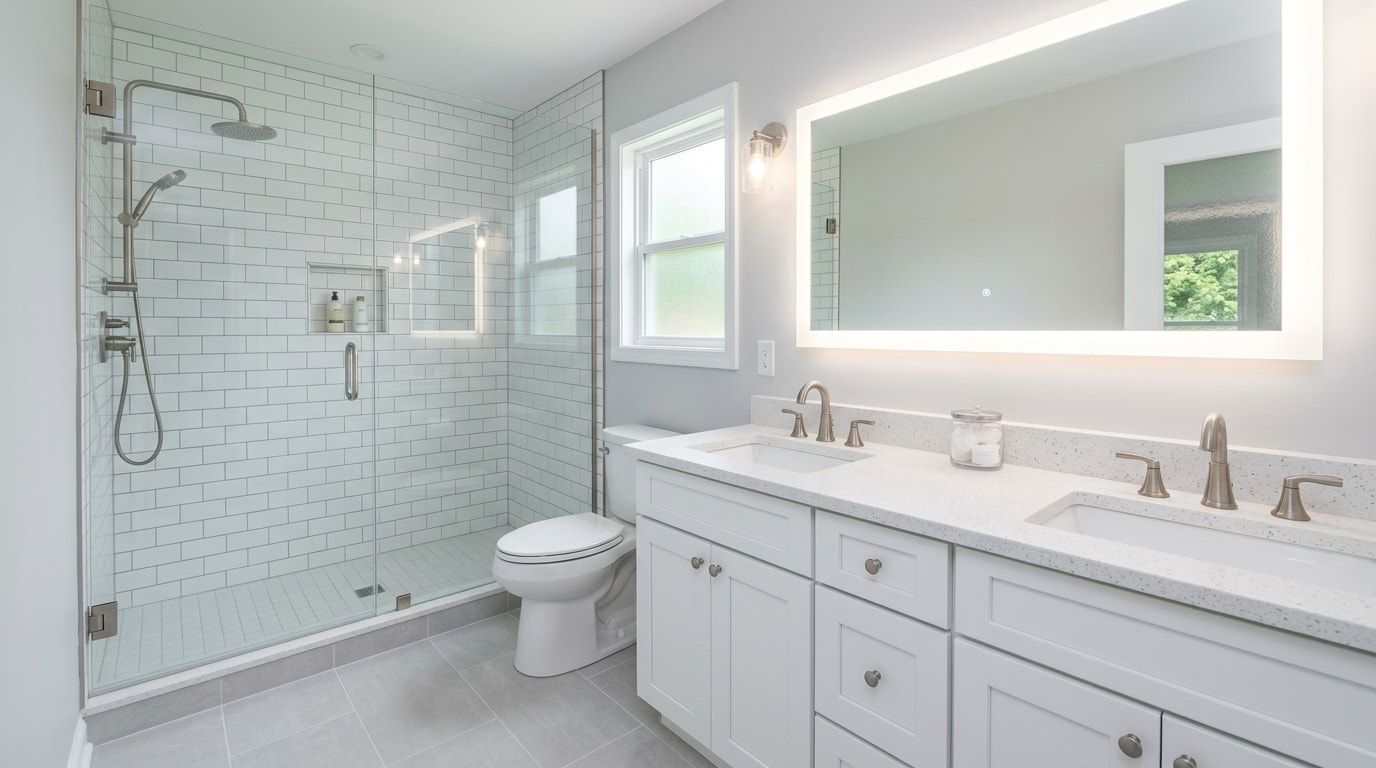
A midrange remodel replaces surfaces and fixtures inside the existing footprint. That means new flooring, a vanity with a solid-surface or quartz top, a new toilet, a tub-to-shower conversion or updated surround, and better lighting.
No plumbing moves. No walls move.
This tier posts the strongest return of any bath project because it reads move-in-ready to the widest buyer pool at the lowest spend. Nobody walks into a clean, current, well-lit bathroom and subtracts a renovation budget from their offer.
If you are planning one, our step-by-step guide on how to plan a bathroom remodel walks through sequencing before demo day.
Upscale Bathroom Remodel
An upscale remodel brings premium materials and a reworked layout. Think marble or natural stone, custom cabinetry, a frameless glass shower, heated floors, and features like rain showerheads or smart controls.
Here the relationship inverts. As spend climbs, the percentage falls. The 2025 data places upscale bathrooms near the bottom of the 42% to 50% range, because the spending outpaces what most buyers will pay back.
This is also where over-improving shows up. A luxury bath in a midrange neighborhood will not pull the house above its comps, because appraisers lean on what similar homes nearby actually sold for.
Build it because you want to live in it. Do not build it expecting the market to reimburse you.
How Much Does a Bathroom Remodel Cost in 2026?
Bathroom remodeling cost in 2026 typically lands between $10,000 and $30,000, with a national average around $16,500. A full gut with relocated plumbing runs well past that.
The cost drivers are predictable:
- Labor, often 40% to 60% of the total
- Material and fixture selections
- Whether plumbing or walls move
- Bathroom size and existing condition
- Your region and permit requirements
Moving drain lines is the single fastest way to jump a price bracket. Relocating a fixture means opening walls and floors, running new drain and supply lines, often cutting joists, and pulling additional permits, which can add $1,000 to $5,000 per fixture moved.
Budget a contingency too. Set aside 10% to 20% of the total project budget for surprises uncovered during demolition.
If that ceiling is out of reach, the floor is lower than most people assume. Paint, a new light fixture and mirror, swapped faucets and hardware, fresh caulk and regrouted tile can transform a tired bath for a few hundred dollars.
For the full-scope version, see our bathroom remodeling service page or the wider bathroom remodeler category.
Location Changes the Math More Than Finish Level Does
Regional spreads are wide enough to flip the decision. Sellers in the Pacific region, which includes California, Hawaii, Washington, Oregon and Alaska, have seen the highest average ROI on a midrange bathroom remodel at 87.7 percent, on an average remodel cost of $21,855 with $19,378 recouped.
The mechanism is not mysterious. Higher local home values amplify the dollar impact of an identical remodel.
The same $25,000 bath adds more perceived value where the median sale price is $1.5 million than where it is $260,000, because the buyer pool is already budgeting at a different scale.
Treat the national number as a benchmark, not a forecast for your ZIP code. What actually sets your ceiling is what competing listings within a mile of you offer buyers right now.
We see this play out street by street across Los Gatos, Palo Alto and San Jose, where two nearly identical baths can return very different numbers three miles apart.
Which Bathroom Upgrades Actually Add Value
Not every dollar inside a remodel pulls the same weight. The visible, functional moves win: tile, lighting, fixtures, and storage.
Replace the Vanity First
Contractors flag the vanity as the best-return line item in the room. It is a focal point and a key factor in perceived value, and replacing an outdated vanity including the countertop, sink, faucet and cabinetry dramatically updates the space, with modern vanities offering the storage that buyers notice.
Budget honestly, though. A vanity is a bundled cost. The countertop, faucet, sink, mirror and lighting usually go with it.
Buyers look for comfortable counter height, a durable quartz or solid-surface top, and real drawer storage instead of one open cabinet. In a primary bath with enough wall, going from a single to a double vanity is one of the few upgrades buyers name unprompted.
Our countertop installation and bathroom fixture replacement pages cover the parts of that bundle.
Upgrade the Shower
A dated tub-shower combo is the most common thing we are asked to remove in a resale-focused remodel. A clean tile or slab shower installation with good lighting reads as a bigger change than it costs.
Keep at least one tub in the house if you have small-family buyers in your comps.
Add Accessibility Features That Look Like Design
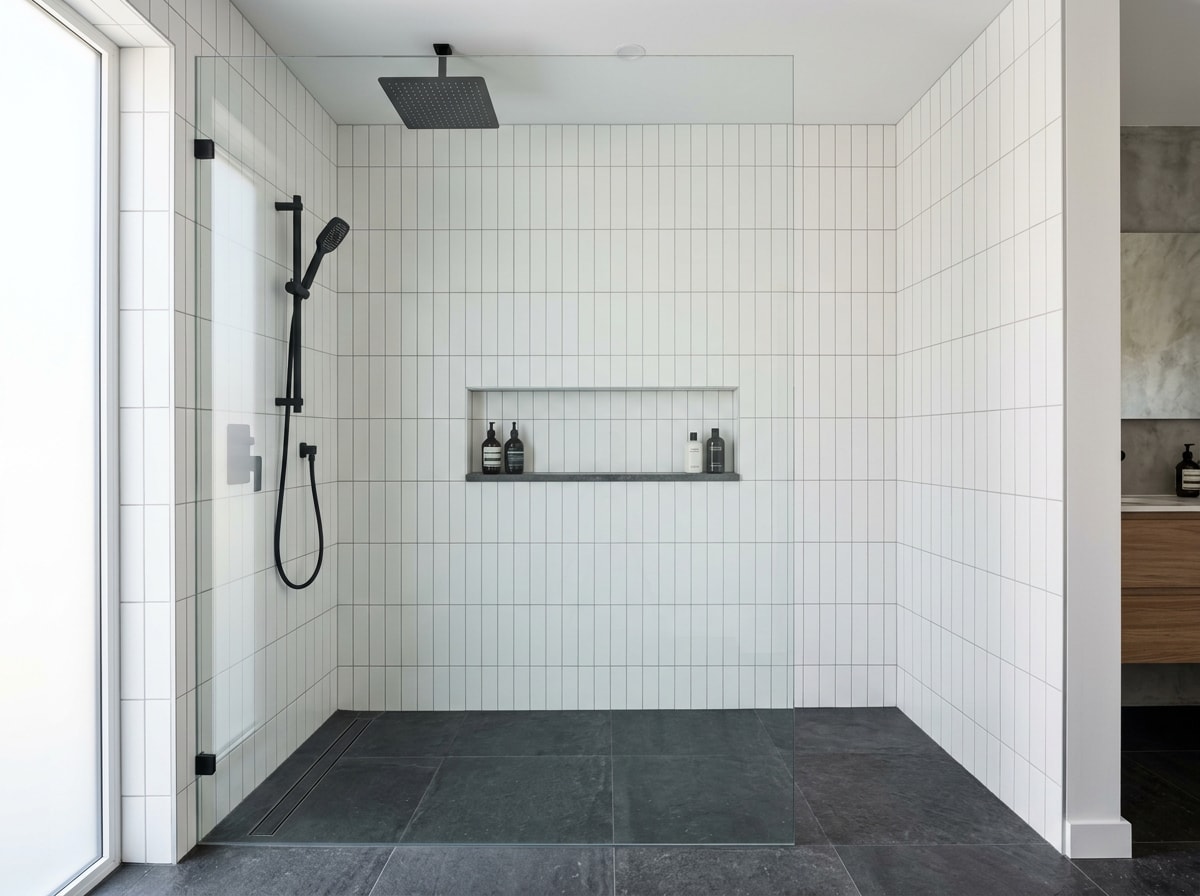
Demand for aging-in-place work keeps climbing. Many older households choose to remain in their current homes and age in place, and older homeowners already account for nearly half of total home improvement spending, compared with a historical share of 30 percent , according to Harvard's Joint Center for Housing Studies research on aging in place.
Done well, universal design reads as design, not medical equipment:
- Zero-threshold walk-in shower with a linear drain
- Decorative grab bars matched to the fixture finish
- Adjustable-height handheld showerhead
- Slip-resistant tile or luxury vinyl flooring
- Built-in shower bench
The market has noticed. Zonda's Cost vs. Value Report shows universal-design bath remodels gained 12 ROI points to recoup 61% in 2025, the largest single-year increase in the report's interior-projects category.
One caveat: universal design still costs more than a midrange remodel and returns a lower percentage. Frame it as a stay-put play.
Should You Add a Whole New Bathroom Instead?
For a one-bath home, or a four-bedroom with a single full bath, adding a bathroom can beat remodeling the one you have, even though the percentage looks worse on paper.
The remodel wins on percentage. The addition wins on marketability, because a bad bedroom-to-bath ratio filters buyers out of your listing before they ever schedule a showing.
A standard version is modest: roughly a 6-by-8 full bath with midrange finishes, carved out of existing square footage. A half bath on a crowded main floor is often the cheapest version of this fix.
If the square footage has to come from somewhere, look at a home addition or a garage conversion before you widen the footprint.
Is It Worth Remodeling a Bathroom Before Selling?
Use a test, not a gut feeling.
Remodel now if:
- There are active leaks, water damage, or a soft subfloor
- It is the only full bath and it has a tub with no shower
- Fixtures, tile or plumbing are 25 or more years old
- Three competing listings nearby have updated baths
Skip it and do a cosmetic refresh if:
- Homes in your ZIP code go pending in under two weeks
- The bath is dated but sound, clean and leak-free
- You are listing in under 60 days
Agents lean toward cheaper pre-listing moves. The top projects Realtors recommend sellers complete before listing include painting the entire home at 50%, painting a single interior room at 41%, and installing new roofing at 37%.
That said, buyer demand for updated baths is real. Kitchen upgrades at 48%, new roofing at 43% and bathroom renovations at 35% are the projects with the highest observed increase in demand.
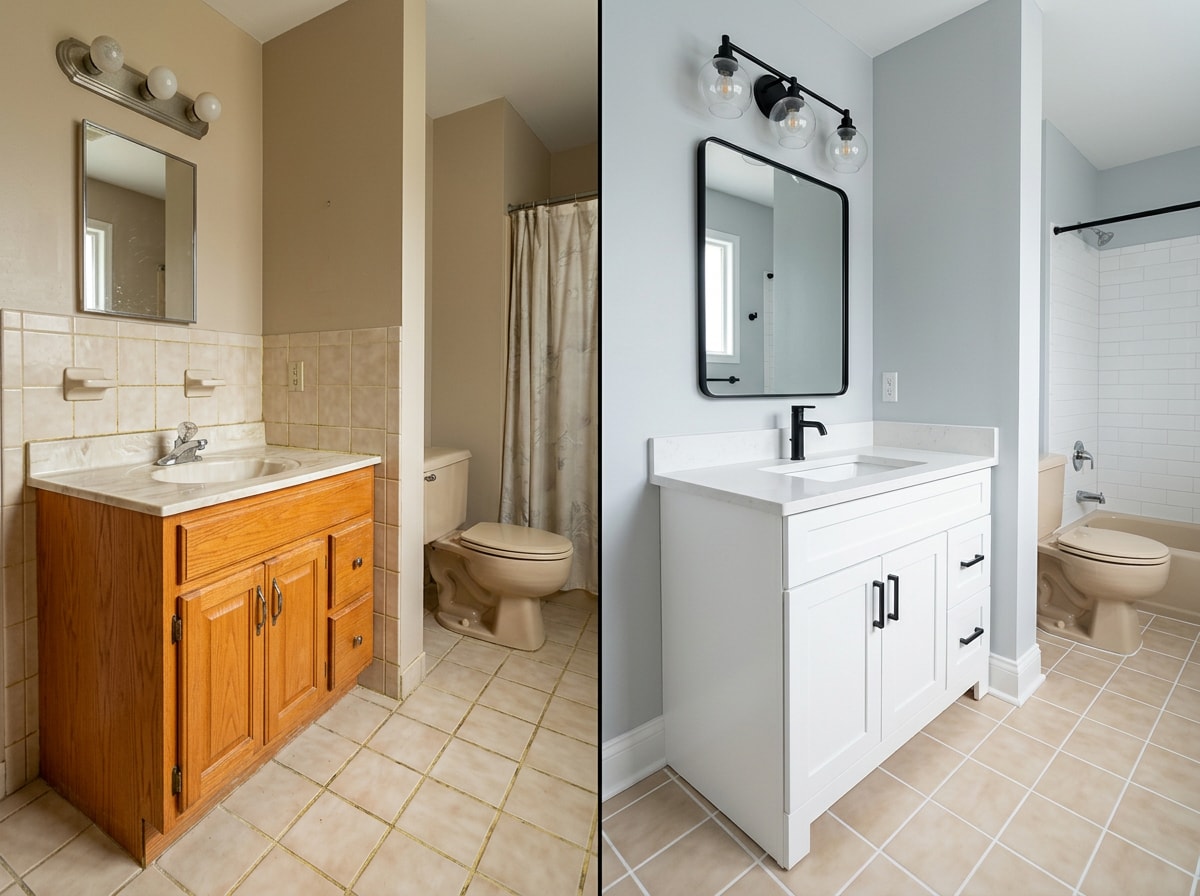
A buyer standing in a dated bathroom silently adds their own renovation estimate to the offer, and that number is almost always larger than a focused midrange update would have cost you.
See finished work in our project gallery, or get a free estimate and we will tell you honestly whether your bath is a remodel or a refresh.
FAQ
How much value does adding a bathroom add?
Adding a full bath typically raises home value by roughly 10% to 20%, and a half bath closer to 5% to 10%. The figure depends on how unbalanced your bedroom-to-bath ratio is and what comparable homes already offer.
How much value does renovating a bathroom add?
Expect 50 to 80 cents back on every dollar. The 2025 JLC/Zonda Cost vs. Value Report puts a midrange bathroom remodel at 80.0% cost recovery nationally , while the broader NAR category figure sits at 50%.
Are bathroom remodels worth it?
It depends on timeline and scope. Worth it for owners staying two or more years, for baths with real defects, and for midrange scope. Questionable for upscale work in a midrange neighborhood or a house listing next month.
Does a bathroom remodel increase property taxes?
It can. Home improvements that increase home value may raise your property taxes, and your local property tax assessor's office can give a rough estimate based on your specific project. Permitted work that adds square footage is most likely to trigger reassessment.
What adds the most value in a bathroom for the least money?
Lighting, a new vanity with real storage, fresh grout and caulk, updated hardware, and paint. Swapping fixtures is a high-ROI move: small spend, visible result, and water-saving models hand buyers a lower utility bill on top.
Is a kitchen or bathroom remodel the better investment?
Kitchens move the needle more in raw dollars, bathrooms more per square foot. If you can only do one and the bath is functional, most agents will point you at the kitchen. Our kitchen remodeling page covers scope and sequencing.
How long does a bathroom remodel take?
A standard mid-range remodel runs 4 to 6 weeks, smaller cosmetic projects finish in 2 to 3 weeks, and larger or structural remodels often take 8 to 12 weeks.
Do I need permits for a bathroom remodel?
If you move plumbing, alter framing, or add circuits, yes. Like-for-like fixture swaps and surface finishes usually do not require one. Check with your city building department before demo, since requirements vary by jurisdiction.
---
Written and reviewed by the project team at GS Design and Build, licensed general contractors remodeling bathrooms across the San Francisco Peninsula and South Bay. Questions about your own bath? Contact us and we will walk the room with you.