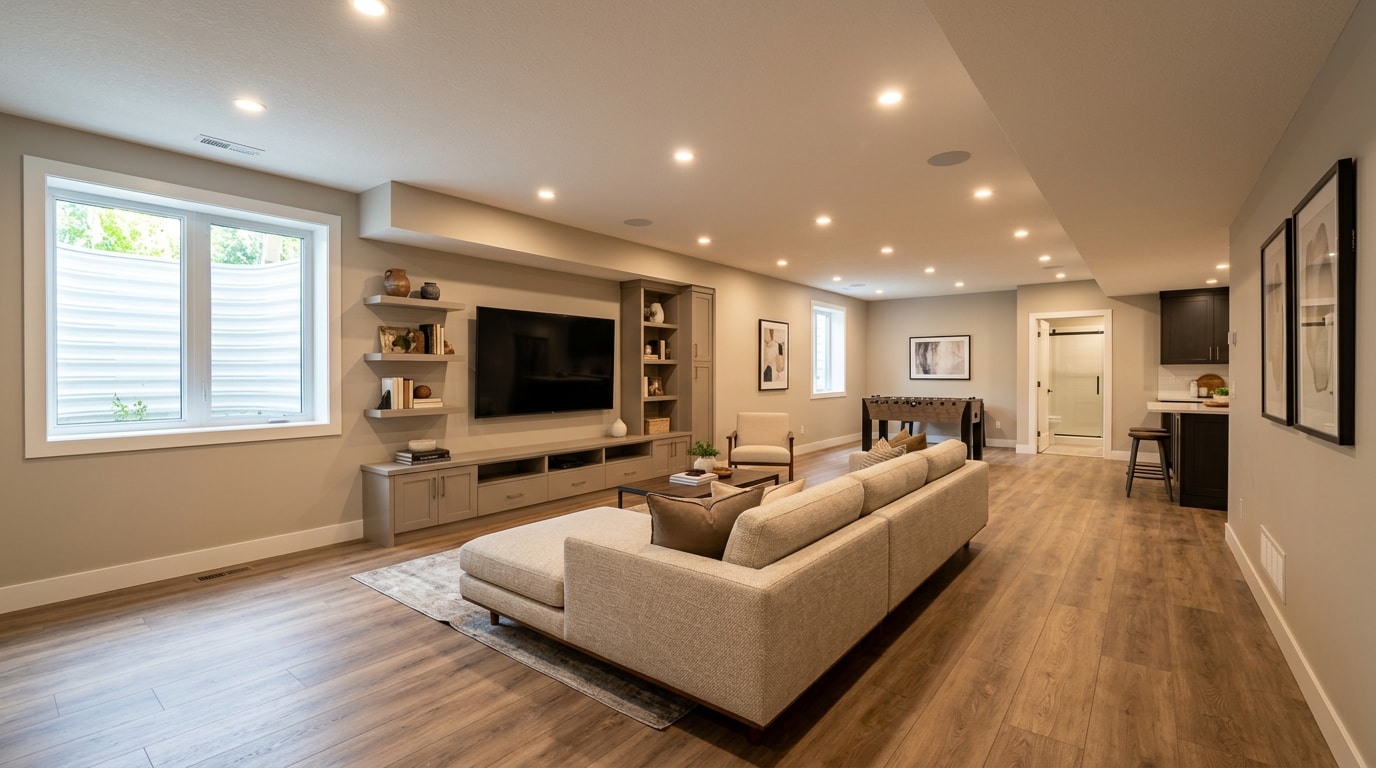
Ask five contractors how much does it cost to renovate a basement and you can get five different numbers for what sounds like the same room: $18,000 from one, $70,000 from another. Neither is wrong, because they are pricing different scopes, finish levels, and starting conditions. This guide breaks the number down the way an estimator builds it, so you can check a real bid line by line.
How Much Does It Cost to Renovate a Basement in 2026?
Most homeowners spend $12,000 to $35,000 to renovate a basement, and full-scope projects with a bathroom or structural work run well past that.
The national benchmarks for 2026 line up closely. Angi reports a 2026 national average of $22,882 based on 7,253 verified projects, with most homeowners paying $12,022 to $34,642 and full-scale renovations reaching about $57,000.
HomeGuide puts the average at $25 to $65 per square foot, or $12,500 to $37,500 total with labor.
Here is how scope maps to budget:
| Scope | Typical 2026 cost | What it buys |
|---|---|---|
| Cosmetic refresh on finished space | $7,000 to $20,000 | Paint, flooring, lighting, trim |
| Standard finish, open rec room | $20,000 to $45,000 | Framing, insulation, drywall, electrical, flooring |
| Mid-range with full bath | $45,000 to $80,000 | All the above plus bath, HVAC extension, wet bar |
| High-end or structural | $85,000 to $150,000+ | Egress, theater, luxury bath, custom millwork |
Two things move your number fast.
The first is local labor. The same 900-square-foot rec room costs noticeably more in a coastal metro than in a rural county.
The second is what the demo crew finds behind the walls. Active moisture intrusion, a failing sump, or non-compliant ceiling height all carry remediation costs before a single stud goes up.
Treat the national average as an anchor, not a quote. If you are scoping a home renovation project this year, the sections below explain which variables pull your own number above or below the midpoint.
Basement Renovation Cost per Square Foot
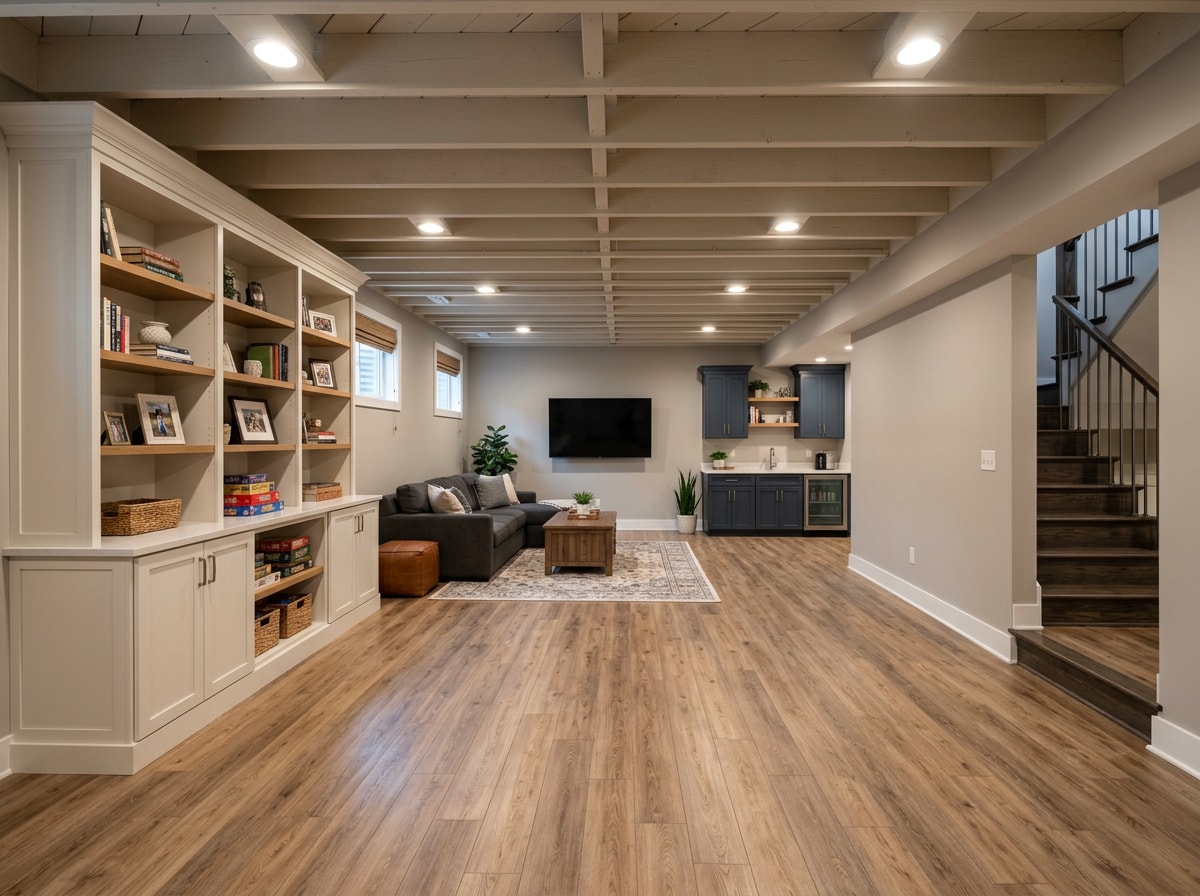
Cost per square foot falls into three distinct bands, not one blended range:
- $7 to $25 per square foot: DIY or budget refresh on a dry, already-wired shell
- $35 to $75 per square foot: standard contractor-led finishing
- $100 to $150+ per square foot: high-end finish with custom and structural work
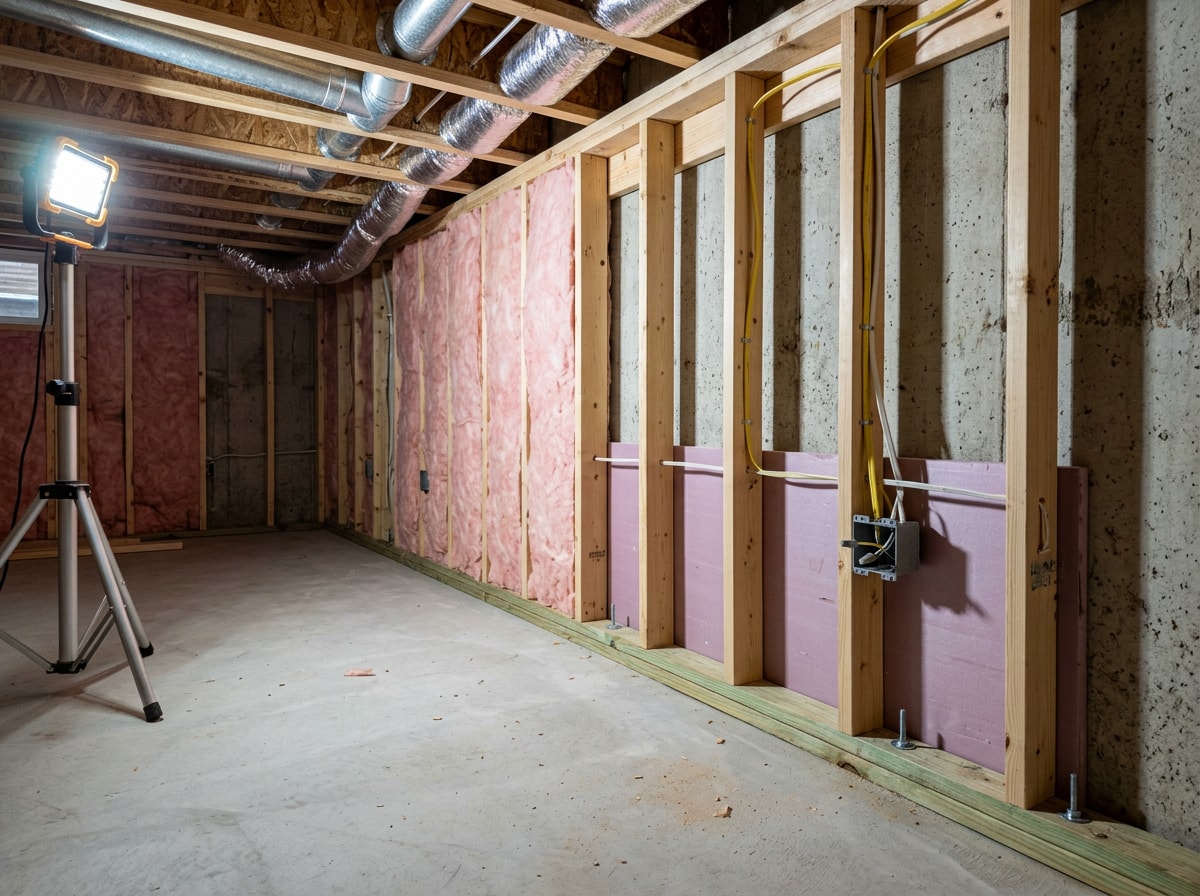
What matters more than the rate is what sits inside it. A standard rate normally covers framing, insulation, drywall, electrical rough-in and trim, flooring, paint, and basic lighting.
It usually does not include waterproofing, sump pump installation, egress window cutting, HVAC extension, or a bathroom. Any one of those can add $3,000 to $15,000.
Be skeptical of very low published rates. A $12-per-square-foot figure almost always describes paint and click-lock flooring over a code-ready shell, which is not the basement most homeowners actually have.
When you compare bids, ask each contractor to write down what their square-foot rate excludes. That single question exposes more price gaps than negotiating ever will.
Basement Renovation Cost by Size
Square footage sets the floor for materials, drywall, flooring, and lighting. At a standard finish level of roughly $35 to $75 per square foot:
| Basement size | Typical cost range (standard finish) |
|---|---|
| 400 sq ft | $14,000 to $30,000 |
| 700 sq ft | $24,500 to $52,500 |
| 1,000 sq ft | $35,000 to $75,000 |
| 1,500 sq ft | $52,500 to $112,500 |
Here is the part that surprises people: scope moves the total more than footprint does.
A 1,500-square-foot open rec room with paint, flooring, and lighting can cost less than a 700-square-foot space carrying a full bathroom, an egress window, and a wet bar.
Small basement numbers look low mainly because small basements rarely get plumbing. Add one bathroom and the size table stops predicting much at all.
Basement Renovation Cost by Finish Level
Finish level is the most reliable way to predict your total. Here are the three tiers at a 1,000-square-foot footprint:
| Finish level | Rate per sq ft | Total at 1,000 sq ft | What's included |
|---|---|---|---|
| Basic / open rec room | $15 to $35 | $15,000 to $35,000 | Framing, insulation, drywall, paint, basic lighting, carpet or LVP, no plumbing |
| Mid-range | $45 to $75 | $45,000 to $75,000 | All of the above plus full bath, upgraded flooring, wet bar, recessed lighting, HVAC extension |
| High-end | $85 to $150+ | $85,000 to $150,000+ | Structural changes, egress, theater room, luxury bath, custom cabinetry, soundproofing |
Published estimates conflict because they describe different projects. Cost databases report $25 to $65 per square foot , while other national guides put basement remodeling at $30 to $75 per square foot, or $30,000 to $75,000 for a 1,000-square-foot space . Both can be accurate; they are not measuring the same finish level.
In practice, most homeowners land in the mid-range tier, not the basic one. The upgrade that pushes projects over the line more than any other is the bathroom, because it drags plumbing, waterproofing, and often a sewage ejector into a budget scoped without them.
Basement Renovation Cost by Room and Feature
Add-ons, not square footage, separate a mid-range budget from a high-end one. A wet bar is the common lower-cost addition at $2,500 to $12,000, depending on whether you run a sink drain and how much cabinetry you order.
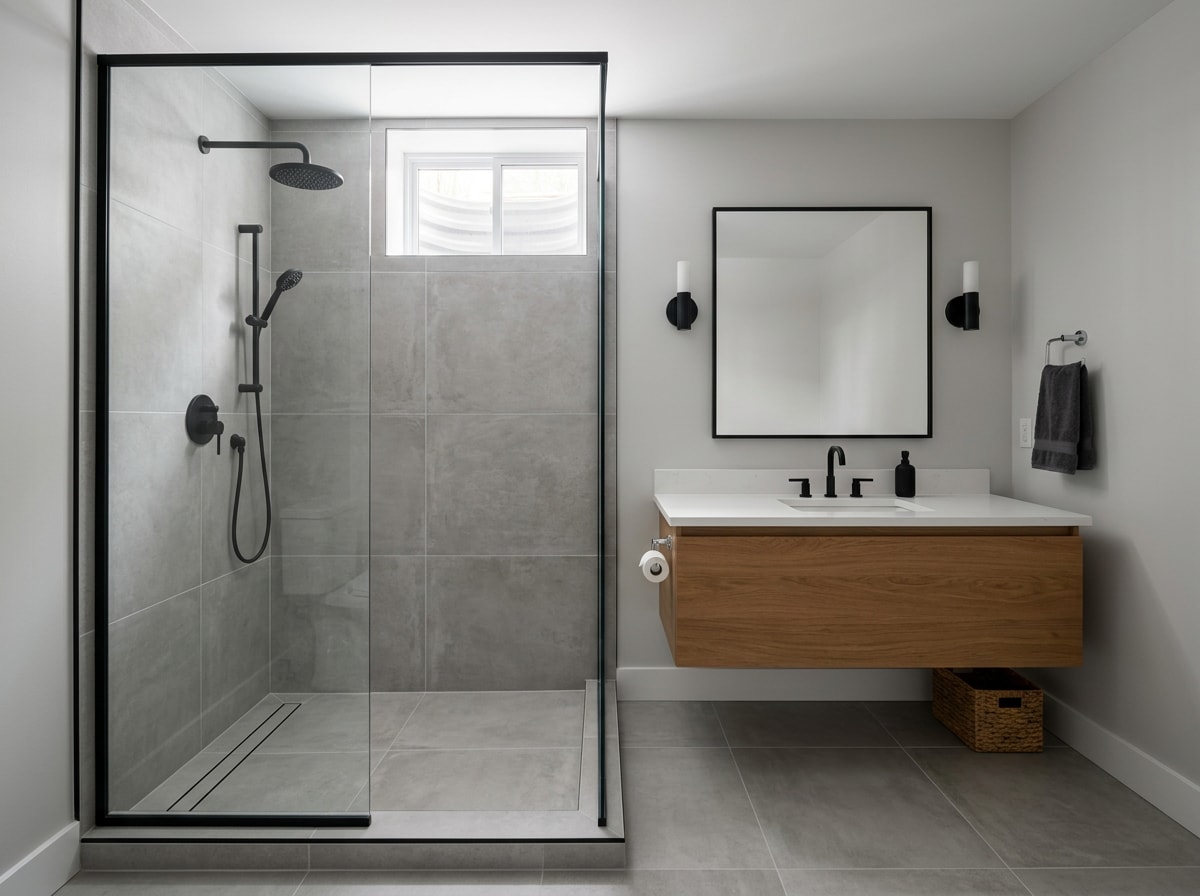
Bathroom
A basement half bath runs $5,000 to $15,000. A full bath runs $10,000 to $30,000.
If your builder left a rough-in, meaning capped drain and supply lines already in the slab, you will sit near the low end. Running new drainage means cutting and patching concrete, which adds $1,500 to $5,000 on its own.
The bigger driver is elevation. Basement fixtures usually sit below the municipal sewer line, so gravity cannot carry waste out.
That means a sewage ejector pump in a sealed basin or an up-flush system, typically $1,500 to $4,500 installed with required venting. It is why an identical bathroom remodel costs 30% to 50% more downstairs, and it is the line item most often missing from a low bid.
Bedroom
Converting existing finished space into a bedroom with paint and flooring can cost $3,000 to $8,000.
Building one from scratch, with a new partition wall, door, circuits, and closet, pushes basement bedroom cost to $10,000 to $25,000.
Closets price separately. A standard reach-in build-out runs $1,200 to $2,500, and a custom walk-in with organizers runs $2,500 to $8,000.
One caveat before you budget: a below-grade bedroom cannot be listed or appraised as a legal bedroom without a compliant emergency escape opening.
Egress Window
Installed egress window cost runs $2,500 to $7,500, including window, well, and backfill. Cutting a new opening through a poured foundation adds $1,500 to $4,000 before any interior finishes, because the crew needs saw access, shoring, and a new header.
The dimensions are not negotiable. Code sets a minimum net clear opening of 5.7 square feet, a minimum opening height of 24 inches, and a minimum opening width of 20 inches , plus a window well of at least 9 square feet with a 36-inch minimum projection, and a permanent ladder or steps when the well is deeper than 44 inches .
Check the ICC requirements for emergency escape and rescue openings for the exact figures your inspector will measure against, since local amendments can be stricter. Pricing for the unit itself follows standard window replacement rates once the opening exists.
Home Theater
A modest media room with a projector, screen, and a few seats in already-finished space starts around $2,000 to $6,000.
A dedicated room with tiered seating, in-wall speakers, acoustic treatment, and dedicated circuits runs $15,000 to $30,000+.
The spread comes down to four things: seat count and whether risers are framed, equipment tier, soundproofing (resilient channel, insulation, and solid-core doors add $1.50 to $5 per square foot), and electrical load.
Hidden Conditions That Break Basement Budgets
This is the part national cost pages skip, and it is where most of the overruns we see actually come from. On our own below-grade projects, the pre-construction condition of the basement changed the final invoice more often than any finish upgrade the homeowner chose.
Price these before you sign anything:
| Hidden condition | Typical added cost | Why it triggers |
|---|---|---|
| Interior perimeter drain and sump system | $3,000 to $12,000 | Standing water, efflorescence, seasonal seepage |
| Foundation crack injection or repair | $600 to $6,000 | Active leaks, horizontal cracks, bowing walls |
| Ceiling height below code | $50 to $100 per sq ft to lower the floor | Habitable space needs roughly 7 feet of clear height |
| Mold remediation | $1,500 to $6,000 | Found behind paneling or under old carpet |
| Asbestos or lead abatement | $1,500 to $8,000 | Pre-1980 tile, mastic, duct wrap, paint |
| Radon mitigation | $800 to $2,500 | Elevated readings before or after finishing |
| Electrical panel upgrade | $1,500 to $4,500 | No spare capacity for new circuits |
Two of those deserve extra attention.
A basement generally must be 7 to 8 feet tall to count as living space, digging and lowering a basement floor costs $50 to $100 per square foot, and a structural engineer runs $100 to $220 per hour or 1% to 5% of project cost. A ceiling-height problem can double a basement budget on its own, so measure before you design.
Radon is the second. Finishing tightens the space and cuts natural ventilation, so test before you frame. The EPA's guidance on radon-resistant construction techniques explains the sealing and vent-stack details that cost very little during construction and a great deal afterward.
If your foundation shows movement or cracking, price foundation repair as a separate project before finish work is scheduled. Finishing over a moving foundation buries the problem behind drywall.
Labor, Permits, and Inspections
Labor typically takes 40% to 60% of a basement budget, a higher share than most interior remodels. A finished basement pulls in framing carpenters, an electrician, often a plumber, an HVAC tech, drywall crews, and a flooring installer, each waiting on the trade before it.
Rough 2026 rates, which vary widely by market:
- General contractor: 10% to 20% of project cost, or $50 to $150 per hour
- Electrician: $50 to $130 per hour
- Plumber: $45 to $200 per hour
- HVAC technician: $75 to $150 per hour
- Drywall installation: $1.50 to $3.50 per square foot installed
Tight stairwells, low ceilings, and limited staging space slow every one of those trades down, which is why below-grade labor runs higher per square foot than identical work on a main floor. For a market-level sanity check, the Bureau of Labor Statistics wage data for construction occupations publishes medians you can compare against a bid.
On permits, expect $200 to $3,000, with most projects landing between $500 and $1,500. Building permits for structural projects commonly cost $500 to $2,000. Some jurisdictions charge flat fees; others calculate roughly 0.5% to 2% of declared project value.
Finishing a basement usually triggers several separate inspections: framing, electrical, plumbing if you add fixtures, and mechanical if you extend ductwork. Fee schedules differ sharply between cities, so confirm with your own building department. Our service pages for San Jose, Palo Alto, and Redwood City note local requirements where they apply.
Budget the pre-construction items in this same bucket. Blueprints run $30 to $120 per hour or $100 to $1,500 for a renovation, radon testing costs $125 to $400, and a mold inspection costs $300 to $650.
Skipping permits is not a saving. Unpermitted finished space can be excluded from appraised square footage, and buyers' inspectors routinely flag it, which can mean opening finished walls at resale.
Basement Renovation vs. Remodel: The Cost Difference
The words get used interchangeably, but contractors price them differently.
A renovation refreshes what is already there: paint, flooring, lighting, trim, with no change to layout or structure. Expect $5,000 to $20,000, or roughly $10 to $30 per square foot.
A remodel changes layout, structure, or purpose: moving walls, adding a bathroom, cutting an egress window, converting storage into living space. That is $25,000 to $75,000+ for most homes. Industry cost guides draw the same line, treating a remodel as the total overhaul with structural changes and a renovation as the lower-cost visual update.
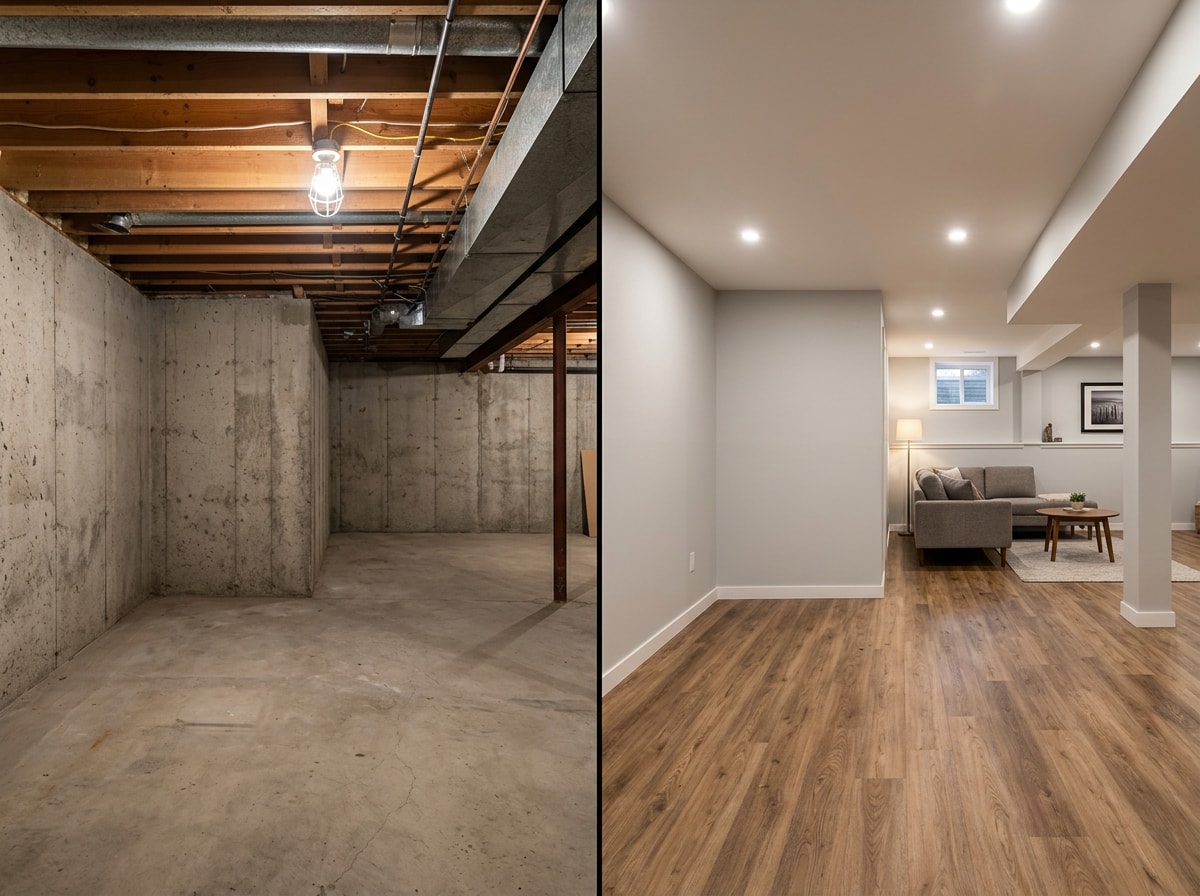
Here is the practical wrinkle. Many people searching for basement renovation cost actually mean finishing an unfinished basement, which is the full remodel scope starting from bare block or poured walls.
If your basement has never had drywall, insulation, or finished flooring, price the remodel column. Our breakdown of what finishing a basement costs walks through that scope in detail. Confusing the two is the most common reason a budget comes up short.
Is a Basement Renovation Worth It? ROI and Home Value
Industry estimates commonly place basement recoup near 70% of project cost at resale, though the figure shifts by region and reporting source.
What moves it:
- Whether the work was permitted and inspected
- Whether the finish level matches the neighborhood
- Whether the space converts to a use buyers value, such as a legal bedroom or a full bath
The appraisal detail matters. Below-grade square footage is generally valued separately from above-grade space and at a lower rate, which is why basement ROI behaves differently from an addition that adds true main-floor area. Research from the Harvard Joint Center for Housing Studies remodeling program tracks how remodeling spending and returns shift with market conditions, so treat any single percentage as directional.
Resale is not the only case. You gain usable square footage at roughly half the per-square-foot cost of an addition, since the foundation, exterior walls, and roof are already in place.
The trade-offs are a higher property tax assessment once the space is counted, and ongoing moisture management that finished walls make harder to monitor.
Want a number for your own basement instead of a range? Get a free estimate and we will price the scope line by line, including the conditions a walkthrough usually turns up.
No Basement? Cheaper Ways to Add Living Space
Most Bay Area and California homes sit on slabs or shallow crawlspaces rather than full basements, so "basement renovation" here often means excavating or converting something else. Digging a new basement under an existing house is the most expensive way to add square footage, not the cheapest.
Before you price an excavation, compare these:
- Garage conversion: existing slab, walls, and roof, the lowest cost per square foot of any conversion
- Garage conversion ADU: adds a legal, rentable unit within the same footprint
- ADU construction: detached space with its own utilities and entry
- Home addition construction: more expensive per square foot, but counts fully as above-grade area
Homes with existing below-grade space in seismic zones often need seismic retrofit and structural reinforcement work in the same phase, since cripple wall bracing and foundation bolting are easiest to do while walls are open. Bundling that with finish work saves a second mobilization.
You can see completed below-grade and conversion work on our projects page, and the full scope list on our general contractor services page.
How to Save Money on a Basement Renovation
Real savings come from scope decisions made before demolition, not from haggling afterward.
- Get 3 to 5 itemized bids, not lump sums. Line-item pricing exposes which contractor left out the ejector pump. Spread on identical scope routinely runs 20% to 30%.
- DIY the finish work. Painting, click-lock flooring, demo, and trim are homeowner-friendly and can cut 10% to 20% off the total.
- Leave the licensed trades alone. Electrical, plumbing, structural framing, and waterproofing need permits and inspections. Failed work costs more to redo than it saved.
- Lock the plan before work starts. Mid-project change orders routinely carry a 15% to 25% premium over the same item priced at bid stage.
- Keep plumbing near existing lines. Siting a bath beside the existing stack can save $2,000 to $5,000 in slab cutting and drainage.
- Supply your own finishes. Buying flooring, fixtures, and lighting directly avoids markup, often 10% to 35% on materials.
- Settle the ceiling question early. Exposed painted joists cost a fraction of drywall and keep mechanicals accessible.
- Hold a 10% to 20% contingency. Demo uncovers mold, cracks, and asbestos more often than anyone plans for.
One rule worth keeping: cutting cost on moisture control, structure, or code compliance is not a saving, it is a deferred expense. Save on cosmetics, which are cheap to upgrade in five years.
FAQ
How much does it cost to renovate a 1,000-square-foot basement?
Expect $35,000 to $75,000 at a standard contractor-led finish. A budget refresh on an already-finished shell can run near $20,000, and a high-end renovation with a bathroom and theater exceeds $100,000.
What is the cheapest way to renovate a basement?
Keep the layout, skip plumbing, and stay cosmetic. Paint the existing walls and exposed joists, install click-lock LVP over the slab, add surface-mount LED fixtures, and keep the space open instead of framing rooms. That approach typically lands between $7,000 and $20,000.
How long does it take to renovate a basement?
Active construction usually takes 4 to 8 weeks for a standard finish. Total project time runs 2 to 4 months once you include design, scheduling, permitting, and waiting on inspections between phases. Structural work or custom material lead times extend that.
Do you need a permit to finish a basement?
Yes, nearly every jurisdiction requires one. You will typically need a building permit for framing and insulation, plus separate electrical, plumbing, and mechanical permits depending on scope. Contractors usually pull them, but confirm in writing that fees and inspection scheduling are in your contract.
Is it cheaper to finish a basement or build an addition?
Finishing a basement is almost always cheaper, roughly $35 to $75 per square foot versus $120 to $350 per square foot for an addition, because the foundation, walls, and roof already exist. The exception is a ceiling-height failure that forces lowering the floor or underpinning the foundation.
Does a finished basement add to your home's square footage?
Usually not to the official above-grade figure. Appraisers and most MLS rules count below-grade space separately and value it at a lower rate per square foot, even when it is permitted and fully finished.
What is the most expensive part of a basement renovation?
A bathroom, if you are adding one, because of slab cutting, venting, and a sewage ejector. If moisture or height problems exist, waterproofing and floor lowering outrank it and can consume half the budget before finishes begin.
Can I renovate a basement myself?
Partly. Demo, painting, click-lock flooring, and trim are realistic DIY. Framing to code, electrical, plumbing, HVAC, waterproofing, and anything structural need licensed trades and inspections, and failed rough-in work often means tearing out finished surfaces.
---
Written by the estimating and project management team at GS Design & Build, a design-build general contractor working on remodels, additions, and below-grade conversions across the San Francisco Peninsula and South Bay. The cost ranges above reflect our own bid data alongside published 2026 national figures. Questions about your own basement? Start on our homepage or contact us for a walkthrough and a line-item estimate.