Hiring the right concrete cutting contractors in San Carlos comes down to three checks before any blade touches your slab: proper licensing, a GPR scan for buried utilities, and the correct cutting method for your project. Skip that vetting and a routine driveway or plumbing cut can turn into a cracked slab, a severed line, or a change order you never budgeted for. Below, we break down each cutting method, real 2026 price ranges, and the permit rules San Carlos property owners run into most.
At GS Design & Build, concrete cutting usually isn't a standalone job. It's a step inside a larger project: trenching a slab for a new sewer line during a full home remodel, coring a foundation wall for an ADU, or saw-cutting a driveway before a concrete driveway replacement. That context shapes how we scope and price the cutting work itself.
Concrete Cutting Services We Offer in San Carlos
A qualified concrete contractor typically offers five core techniques. Each is suited to a different opening, depth, and surface.
- Core drilling for round, precise penetrations
- Wall sawing for door, window, or mechanical openings
- Slab sawing for horizontal flatwork removal
- GPR scanning to map hidden rebar and utilities
- Selective demolition to remove cut sections cleanly
Core Drilling
Core drilling creates a precise, round hole through concrete walls, floors, or foundations using a diamond-tipped bit. Diameters commonly run from an inch to several feet depending on the job, which makes the method well suited to plumbing, HVAC, and electrical penetrations. A skilled operator produces a clean circular opening without cracking surrounding material, which is critical on load-bearing walls or finished interiors.
Wall Sawing
Wall sawing uses a track-mounted diamond blade to cut openings for new doors, windows, or mechanical penetrations in concrete or masonry walls. Because the saw rides on a guided track rather than being held by hand, it produces straighter, cleaner cuts than a handheld tool. Near structural walls, that precision matters: an uneven cut can affect load paths or require costly patching.
Slab Sawing: Exterior vs. Interior
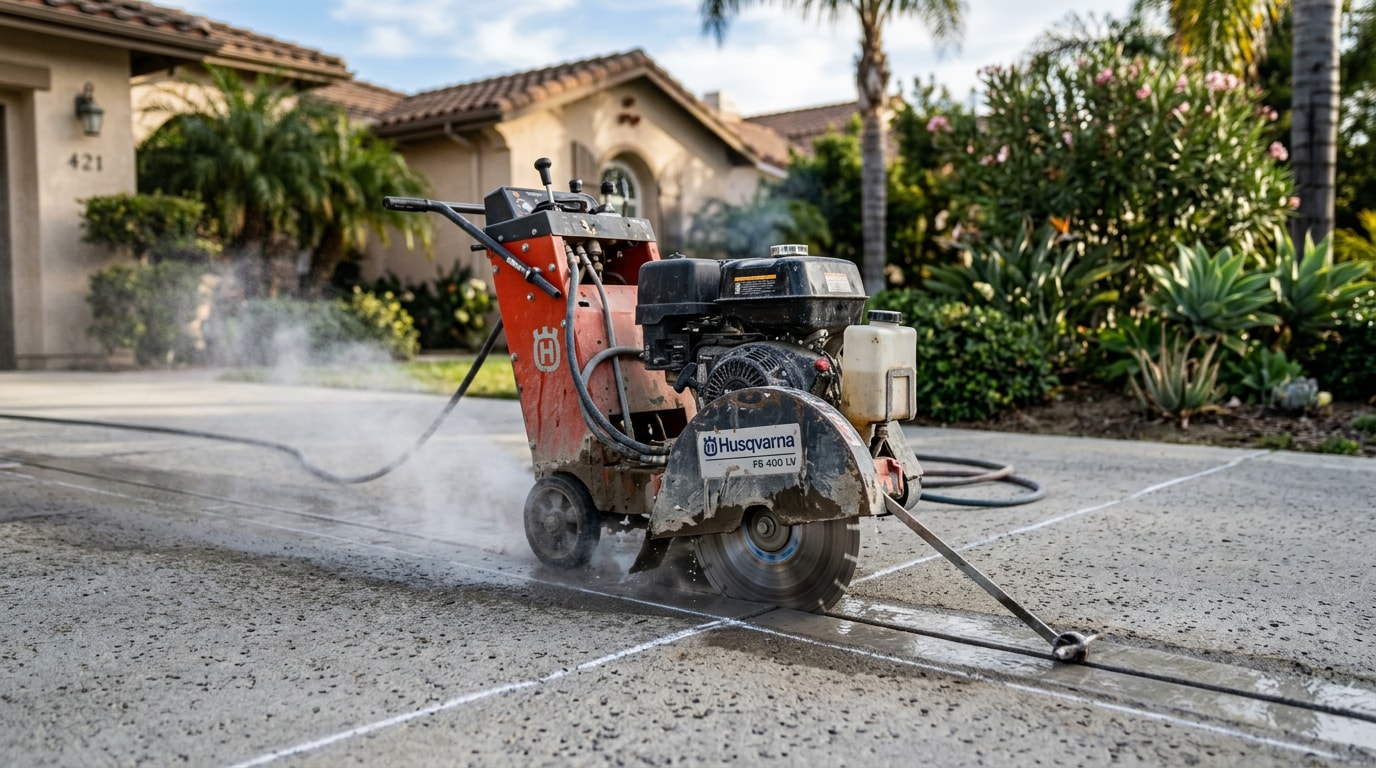
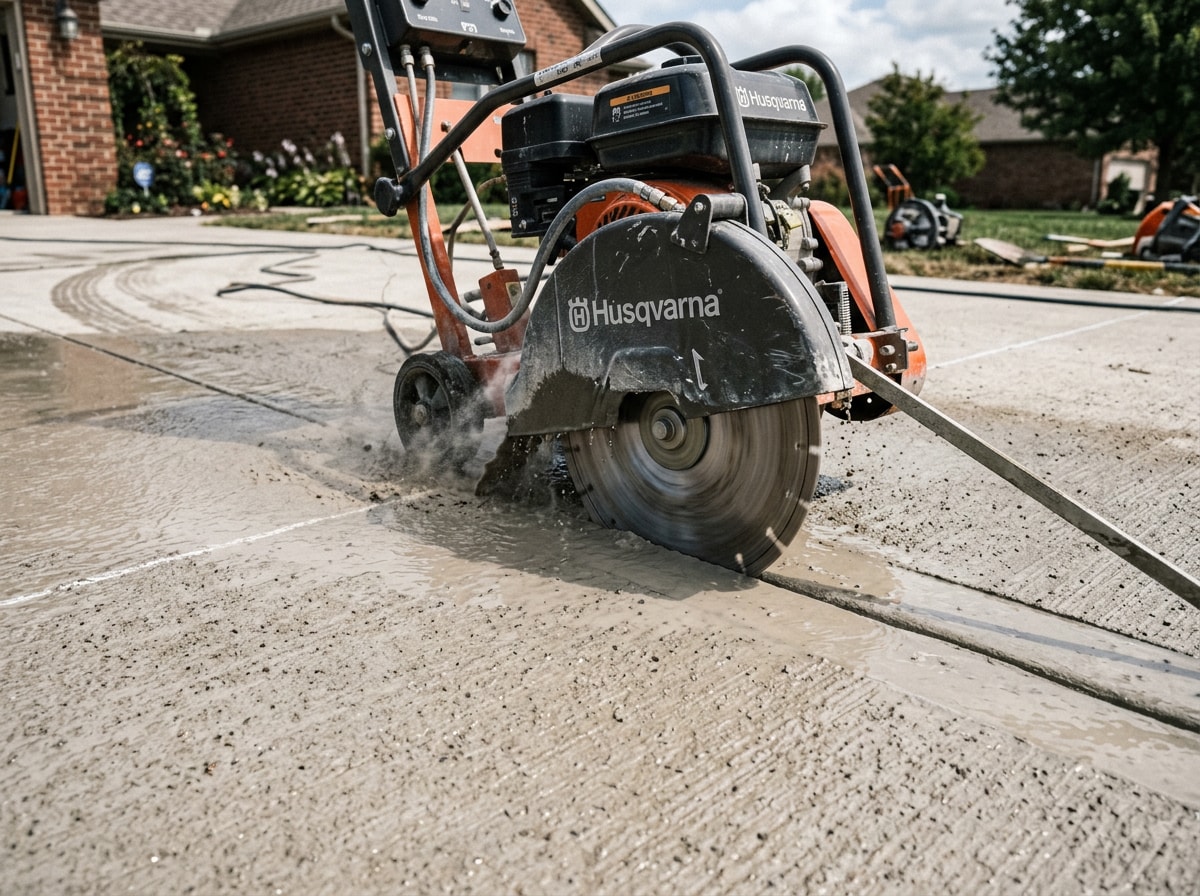
Slab sawing cuts horizontal concrete into removable sections, and the right equipment depends on whether the work happens outside or inside. Exterior work, such as a driveway, sidewalk, or parking area, typically uses a gas-powered walk-behind saw. It can run for hours without a power cord since outdoor ventilation isn't a concern.
Interior cutting is a different job entirely. Confined spaces call for an electric saw paired with wet-cutting or dust-control systems, because gas fumes and airborne dust build up fast indoors. Flat sawing inside a garage or basement also demands careful slab-by-slab removal planning, since there's less room to maneuver large cut pieces out. If you're cutting a basement slab as part of a bigger conversion project, our basement finishing cost guide breaks down what the rest of that project typically runs.
GPR Scanning Before Any Cut
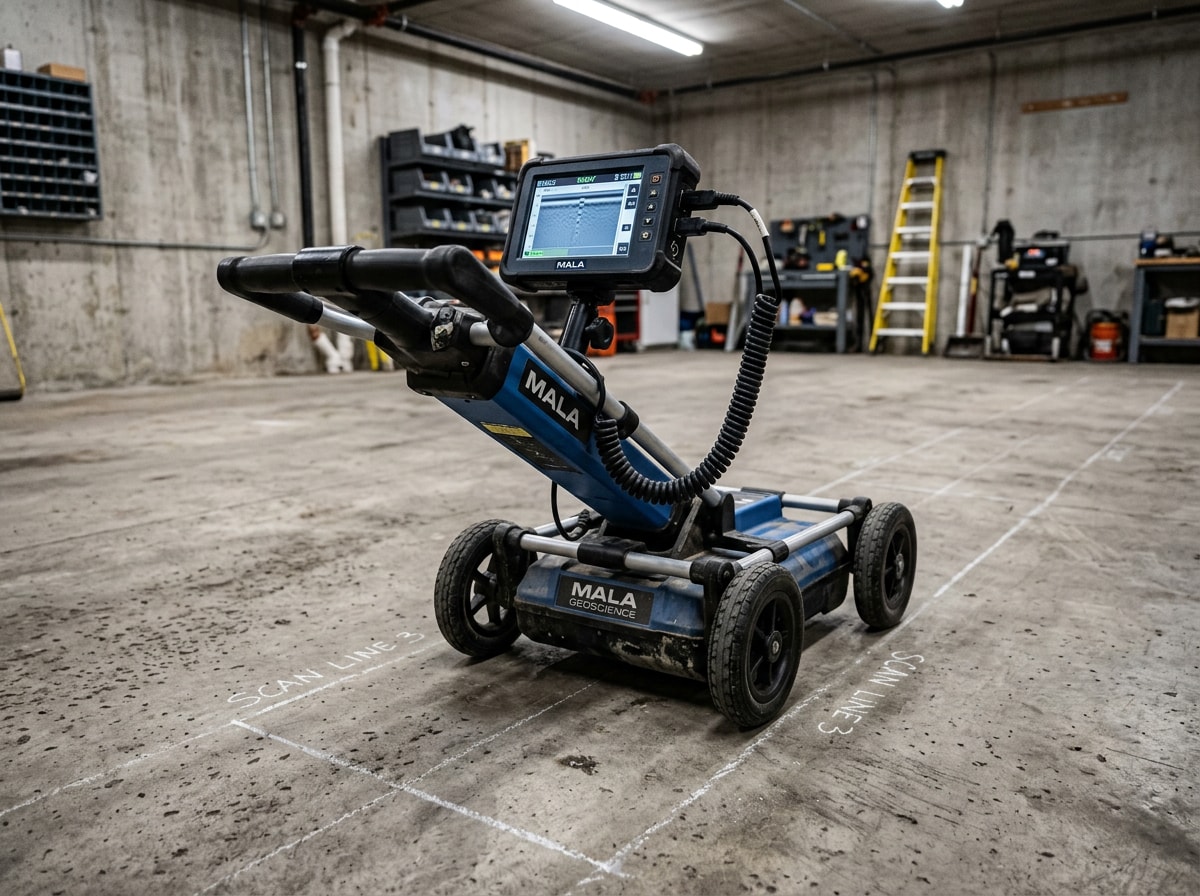
Ground-penetrating radar (GPR) maps what's hidden inside concrete, including rebar, post-tension cables, and conduit, before any cutting begins. This step protects both the structure and the crew, since striking a live electrical line or a tensioned cable can cause serious damage or injury. On older Peninsula properties where as-built drawings may not exist, scanning isn't an optional upsell; it's standard practice.
Dust control matters here too. OSHA's Respirable Crystalline Silica standard for construction requires employers to limit worker exposures to respirable crystalline silica and to take other steps to protect workers. A contractor using water-fed blades or vacuum shrouds on every cut is following that standard, not just keeping the site tidy.
Selective Demolition
Once sections are cut, selective demolition removes the isolated concrete without disturbing the surrounding structure. This companion service covers everything from pulling a single cut slab piece to full removal ahead of a foundation repair project. Pairing cutting and demolition with one contractor usually means fewer scheduling gaps and a more coordinated cleanup.
What Concrete Cutting Costs in San Carlos (2026)
Pricing depends on the method, depth, and whether the concrete is reinforced with rebar or mesh. Here's how the ranges typically break down:
| Service | Typical Cost | Notes |
|---|---|---|
| Slab/driveway sawing | $5–$15 per linear foot | Reinforced concrete costs more to cut |
| Wall sawing | $15–$35 per linear foot | At 1"–12" depths |
| Interior floor cutting (plumbing) | $25–$65 per linear foot | At 8"–18" depths |
| Core drilling | $50–$400 per hole | Plus a setup fee of roughly $200 |
| Minimum service call | $125–$400 | Covers small jobs and mobilization |
Concrete cutting costs $5 to $15 per linear foot, depending on the length, depth, and whether it's reinforced.
Wall concrete sawing costs $15 to $35 per linear foot at 1” to 12” depths.
Costs to cut a basement concrete floor for plumbing run $25 to $65 per linear foot at depths of 8” to 18”.
Most concrete cutting contractors also carry minimum service fees of $125 to $400. For core drilling, concrete core drilling usually costs $50 to $400 per hole, plus a setup fee of about $200.
Site access, slab thickness, and reinforcement all move these numbers up or down. An on-site visit is the only way to get an accurate number for your property, and you can get a free estimate before committing to a scope.
How to Vet a Concrete Cutting Contractor
A few questions separate a careful contractor from one who'll cost you money in rework:
- License:
A C-8 concrete contractor forms, pours, places, finishes and installs specified mass, pavement, flat and other concrete work. Confirm the license is active before signing anything.
- Insurance: Ask for proof of general liability and workers' comp, not just a verbal assurance.
- Scanning protocol: GPR scanning should be standard on any wall or slab cut, not billed as an add-on after the fact.
- Dust control: Water-fed or vacuum-shrouded blades should be the default for interior work, in line with OSHA's silica dust rules.
- Local knowledge: A contractor familiar with San Mateo County permit requirements will flag permit needs before work starts, not after an inspector stops by.
Permits for Concrete Cutting Near San Carlos
Permit requirements depend heavily on scope. Interior cutting for plumbing or electrical rarely needs a separate permit beyond the trade permit already pulled for that work. Exterior cutting that affects a driveway, curb, or sidewalk is a different story.
Any activity that encroaches into a public right-of-way, whether it's construction on a driveway or a sidewalk, generally requires a permit from the local public works department. San Carlos has its own building and public works departments separate from the unincorporated county, so confirm requirements directly with the city before cutting into a driveway apron or curb. A contractor handling site preparation for your project should already know which permits apply.
Service Area We Cover
We serve San Carlos and the surrounding Peninsula and San Mateo County communities, including:
If your property sits near a boundary between cities, it's worth confirming coverage directly. Contact us with your address and scope, and we'll let you know quickly whether it's a fit.
FAQ
What areas do San Carlos concrete cutting contractors service?
Most contractors serving San Carlos also cover nearby Peninsula cities like Redwood City, San Mateo, Menlo Park, Foster City, and Burlingame.
What concrete cutting services are available in San Carlos?
Core drilling, wall sawing, slab sawing, GPR scanning, and selective demolition cover most residential and commercial needs. Review our concrete contractor page for the full scope.
How much does concrete cutting cost?
Slab and driveway cutting typically runs $5 to $15 per linear foot, wall sawing $15 to $35 per linear foot, and core drilling $50 to $400 per hole depending on diameter. Most contractors also charge a minimum service fee of $125 to $400 for small jobs.
Do I need a permit to cut concrete in California?
It depends on scope. Cutting a driveway or curb that touches the public right-of-way often requires a permit, while interior cutting may not need a separate one. Check with San Carlos's public works or building department before starting exterior work.
What's the difference between concrete cutting and core drilling?
Concrete cutting uses saws or wires to section or remove flat areas of concrete. Core drilling uses a diamond-tipped bit to create round penetrations for pipes, cables, or vents.
How thick of concrete can be cut?
Standard walk-behind and wall saws handle most residential slabs and walls up to about 12 to 18 inches thick. Thicker or heavily reinforced concrete may require multiple passes or specialty equipment, which affects both cost and timeline.
Is concrete cutting dust dangerous?
Dry-cutting concrete without water or vacuum controls releases silica dust, which is a recognized respiratory hazard. A contractor using wet-cutting methods or dust extraction on every cut is following standard safety practice, not just keeping the jobsite clean.